Narrow spring size range
That's a narrower range of spring sizes than you'd find in a town with a mix of 1960s and 1990s construction, and it means we're not guessing at wind-up style or drum size when we load the truck for a call here.
Otsego, Elk River
Otsego homes mostly went up around 2007, which means torsion springs on steel track as standard, not the older hardware found elsewhere. We drive the 5 miles from Elk River to fix them.
On the truck
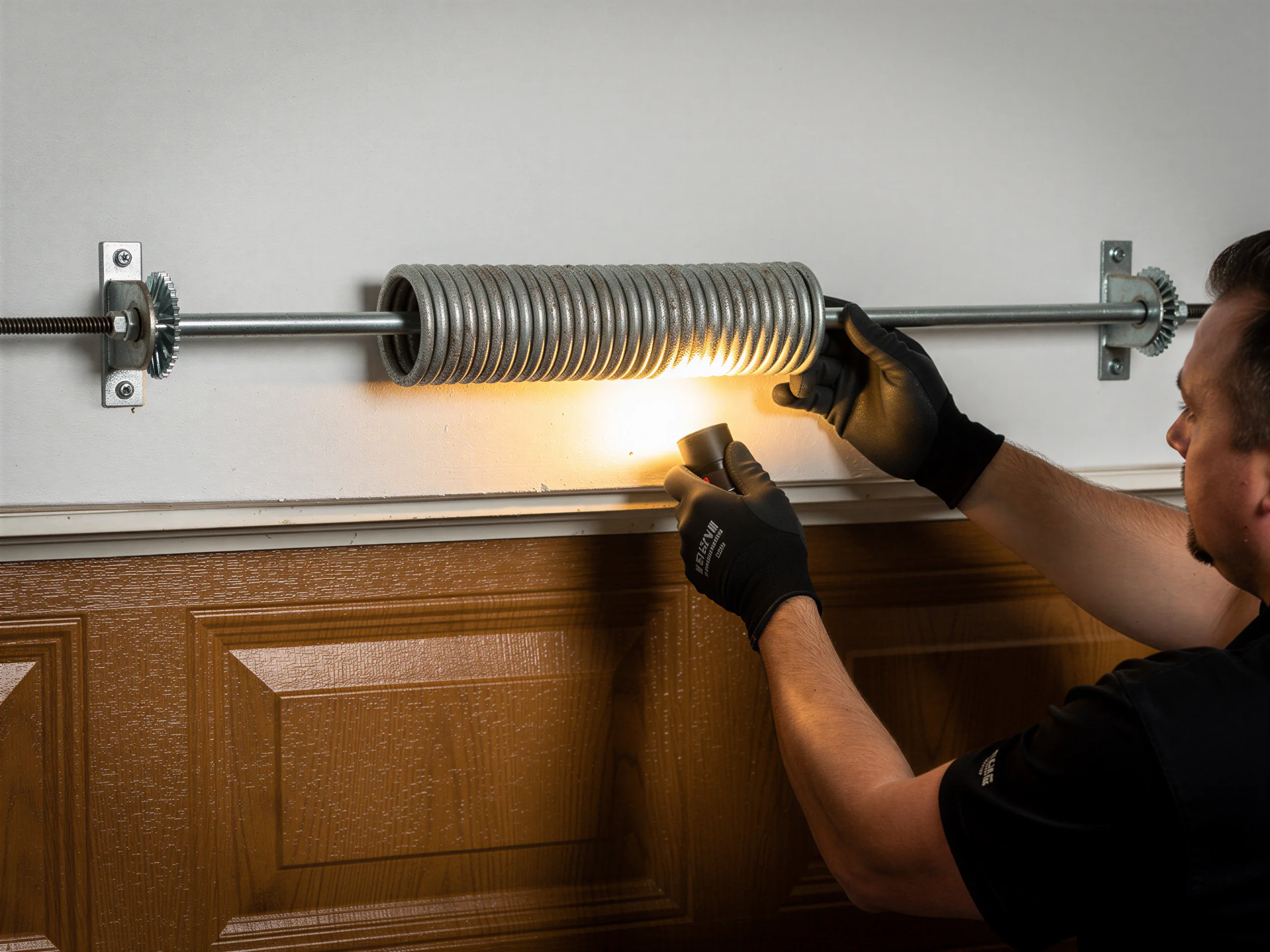
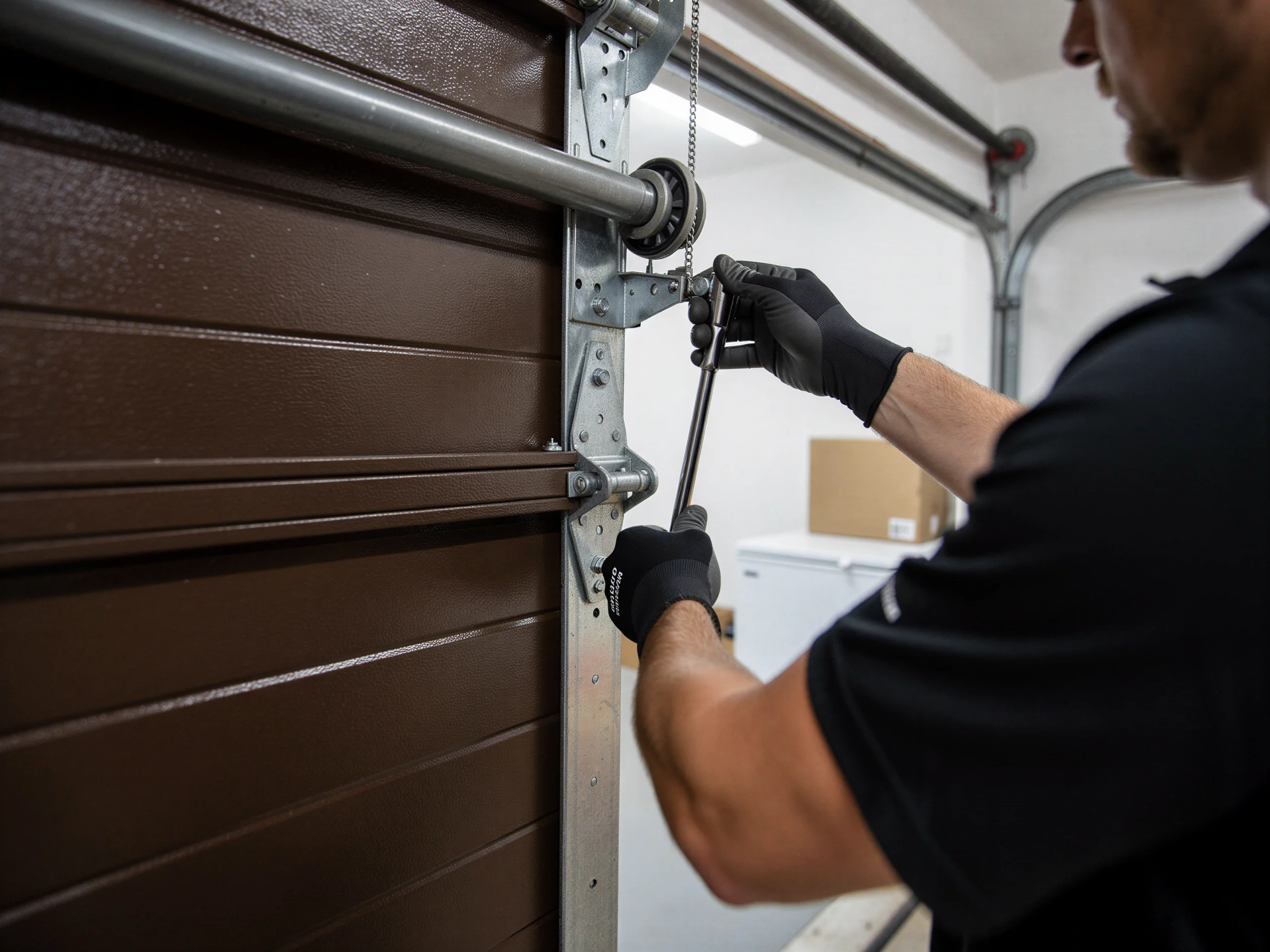
Otsego's median home was built around 2007, which puts most garages here well past the extension-spring era and into torsion systems mounted on a steel shaft above the door.
That's a narrower range of spring sizes than you'd find in a town with a mix of 1960s and 1990s construction, and it means we're not guessing at wind-up style or drum size when we load the truck for a call here.
The springs that fail on these doors are almost always torsion pairs rated for a standard 7-foot double door, sized to the door weight and the 1/4-turn drum setup that was common in production builds from that era.
What we carry on the truck covers that range, plus the matched bearing plates and center brackets that tend to wear alongside the spring on a door that's now 15 to 18 years old. One thing we don't carry is odd-ball or discontinued extension-spring hardware from the 1970s and 80s - that's a different stock list, and it's one we keep for other parts of the service area, not for Otsego.
DIY or pro
A torsion spring under tension can put someone in the hospital, and that's true no matter how new the door is. The winding bars, the cone sizing, and the amount of turns needed to load a spring correctly aren't things to learn from a video while the spring is live.
If your door is one of the newer torsion builds common in Otsego, the spring is under more initial tension than an old extension-spring setup, not less - the compact torsion design loads a lot of force into a short shaft.
What you can safely check yourself: whether the door is a torsion-shaft style (spring sits horizontally above the door, on a tube) or an older extension style (two long springs run along the horizontal tracks).
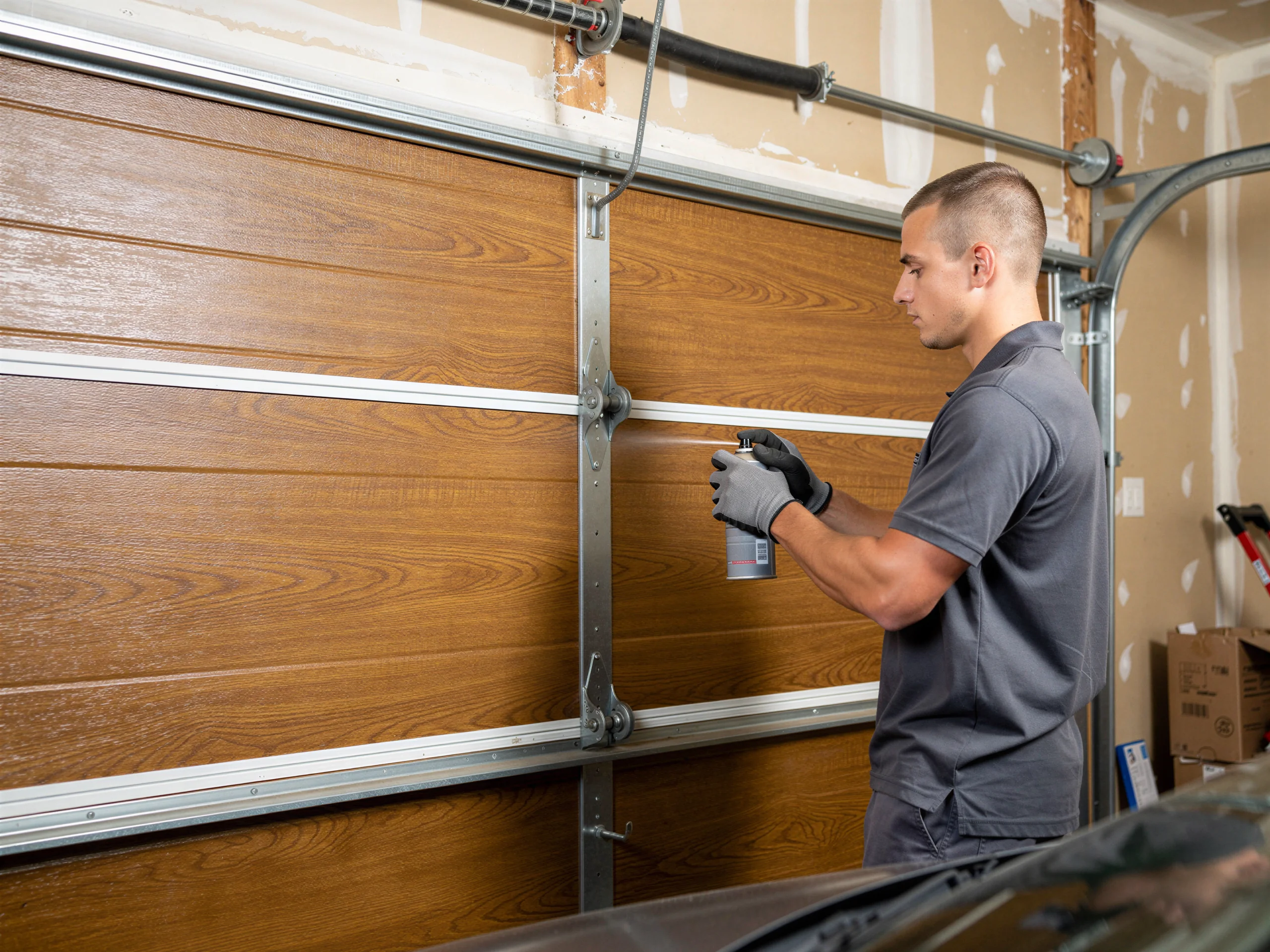
That tells you which repair you're looking at before anyone shows up. Lubricating hinges and rollers, testing the photo-eye sensors, and tightening visible lag bolts on the track are also fine for a homeowner to do. Winding or unwinding the spring itself is not a weekend project.
Booking
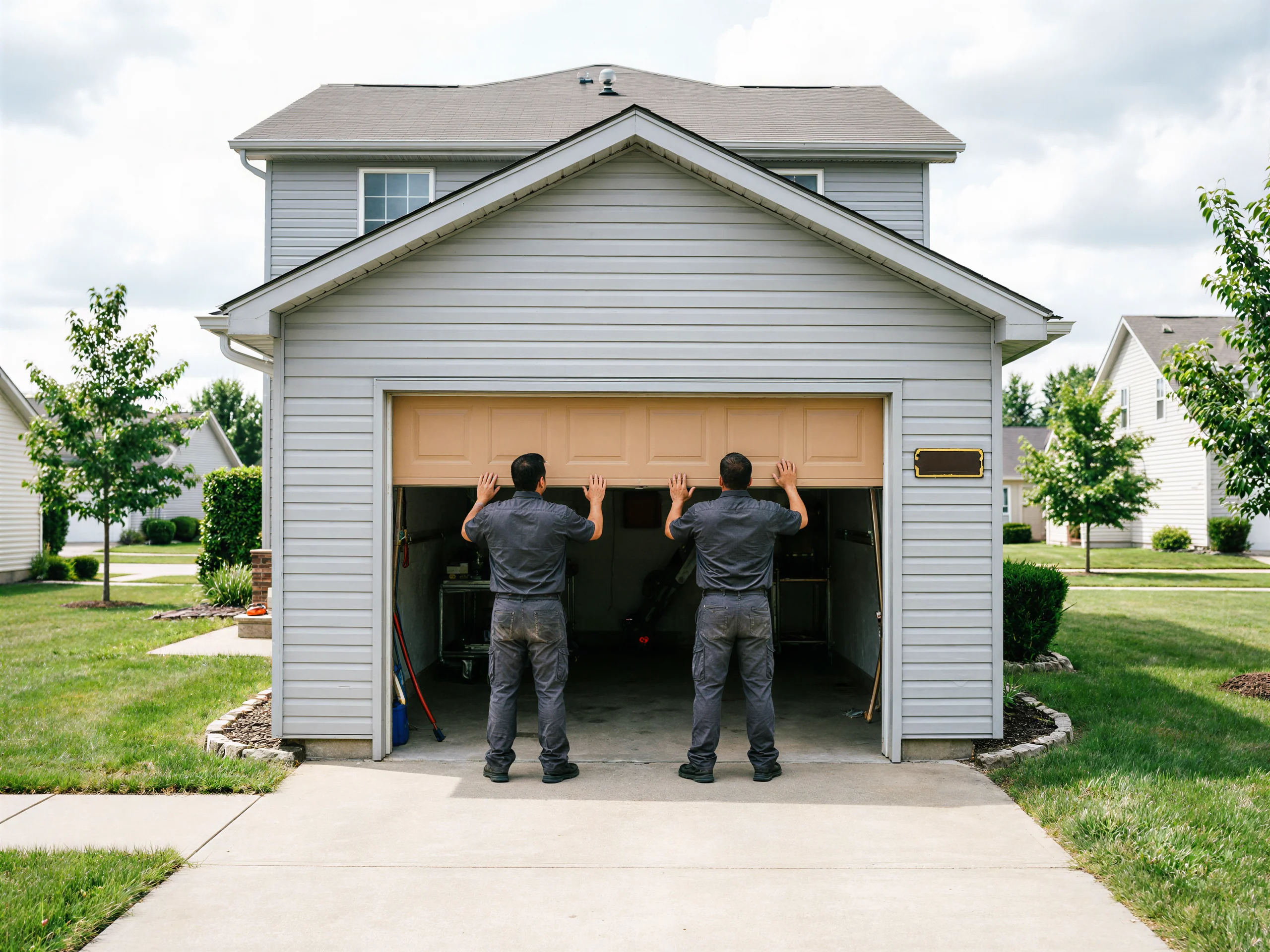
We run out of Elk River, and Otsego sits about 5 miles out - the closest stop on our regular route through this part of the service area. That's a short drive, not a promise of a specific arrival window; we don't quote response times we can't back up, so we won't pretend otherwise here.
When you call, tell us the door's rough age and whether you can see the spring (above the door on a shaft, versus alongside the tracks). That alone usually tells us which parts to bring. If you're not sure, a photo of the open garage, springs visible, saves a second trip for the wrong part.
Warning signs
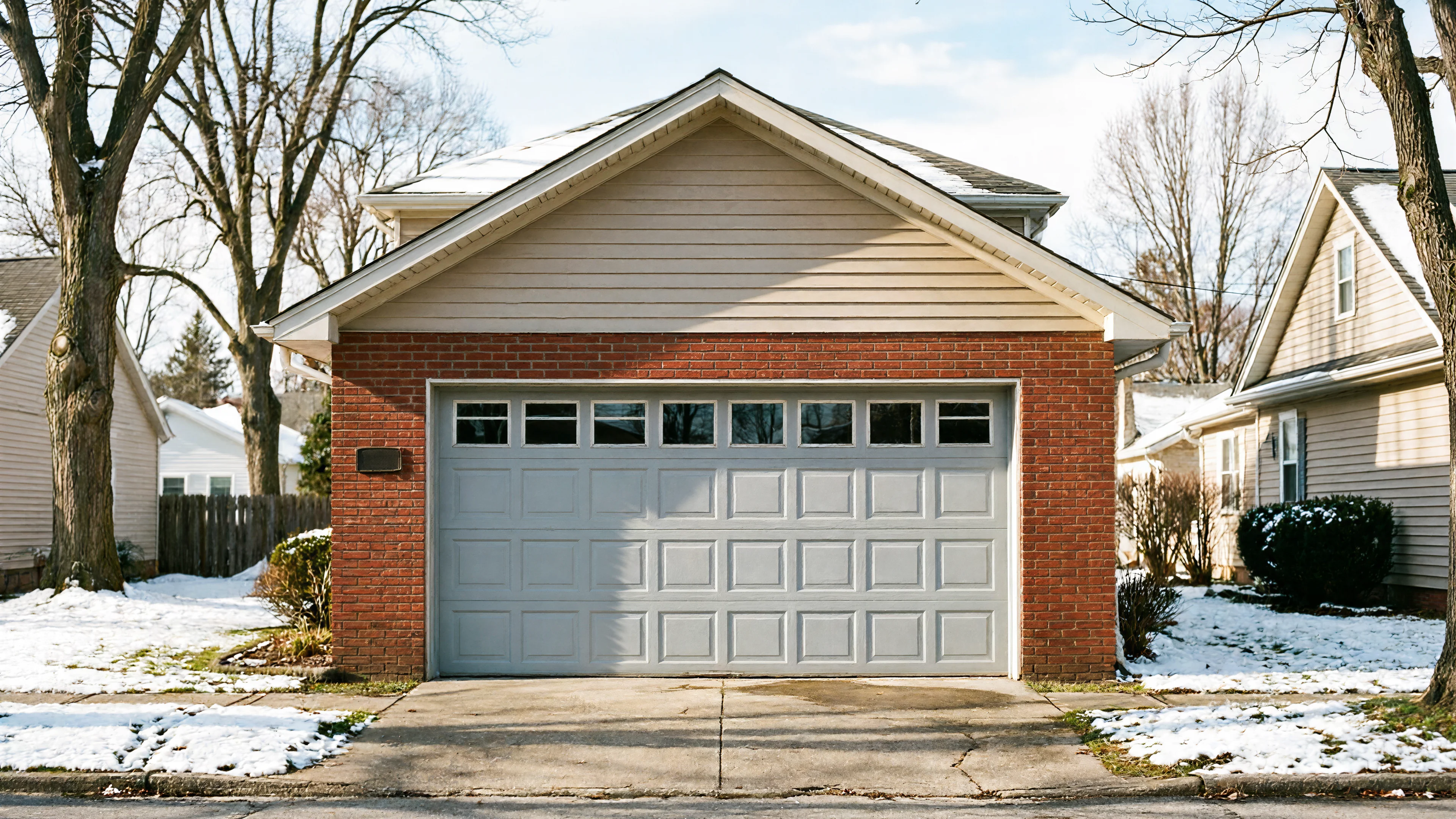
A gap in the coils, a door that won't stay up past waist height, or a loud bang from the garage followed by a door that suddenly feels twice as heavy - that's a broken torsion spring, and it's the most common spring failure we see on doors from this build era.
On a 2007-era double garage door, the springs are matched as a pair; if one breaks, the other is usually close behind on the same wear clock, even though it still looks intact.
A cable that's come off the drum, or a drum that's slipped on the shaft, can look similar from the floor - the door won't open and the opener seems to struggle - but that's a different repair, not a spring job, and it's worth telling us which one you're seeing on the phone so we bring the right parts.
Local causes
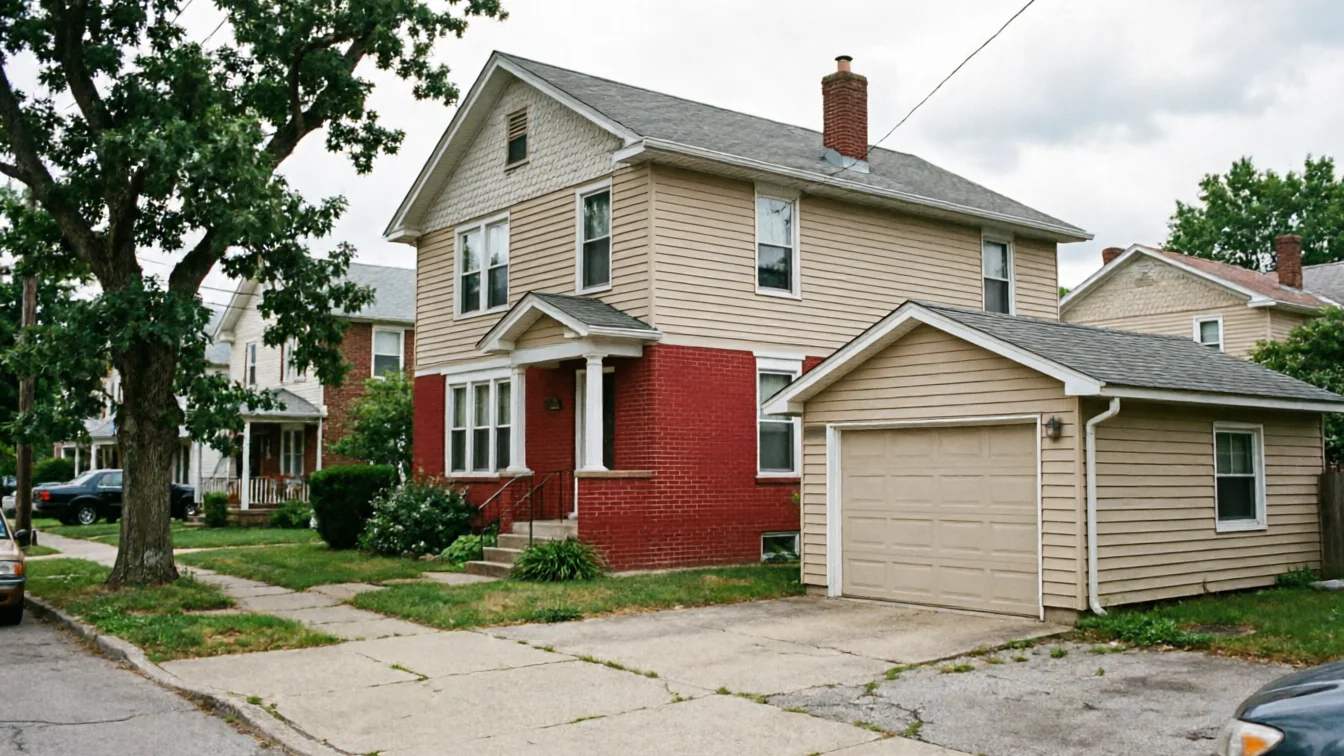
This area sits in a cold-climate band with severe winter swings, and torsion springs lose a measurable amount of their cycle life to cold-weather fatigue - the steel gets stiffer, the coil flexes less smoothly, and repeated freeze-thaw swings add stress a spring in a milder climate never sees. On a door that's already 15-plus years old, that's enough to push a spring from 'worn' to 'snapped' on a cold morning.
Otsego's households carry a median income of $127,219, noticeably above the $110,833 median across the wider service area, and that often shows up as larger, heavier insulated doors on two-car and three-car garages - doors that put more load on the same torsion spring than a lighter uninsulated door would. Combine a heavier door with a cold-stressed spring on a 2007-era home and the failure point isn't a mystery; it's a predictable intersection of build year, door weight, and winter.
Questions
Mostly, yes. Otsego's housing stock centers on 2007, so most doors here use torsion springs on a steel shaft rather than the older side-mounted extension springs you'd find in a neighborhood built in the 1960s or 70s. That means a narrower, more predictable parts list for us, but the same tension risk - torsion springs under load aren't safer just because the house is newer.
About 5 miles from Elk River, which makes it one of the closer stops on our route. We don't quote a guaranteed arrival window, but it is the shortest drive among the towns we cover.
Torsion springs are rated by cycle count, not age, and this area's cold winters add real fatigue stress on top of normal use. A 15-year-old spring on a heavier insulated door, run through repeated winter freeze-thaw cycles, can be right at the end of its rated life even though the house itself still looks new.
You can, but we'd tell you not to. On a matched torsion pair, the second spring is almost always close behind in wear even if it hasn't broken yet, and mismatched springs put uneven tension on the door. Replacing both at once is the standard call here.
Explore more
Ready when you are
Elk River Garage Door Pros repairs and installs garage doors, springs and openers in Elk River, MN and the surrounding area.