Blog
What That Noise Your Garage Door Is Making Actually Means
Grinding, popping, or a thud on the way down - here's what garage door noises mean in Elk River houses built mostly between 1965 and 2007, and when to call.
Checking It Yourself
Before you call anyone, stand in the garage and run the door up and down once with the lights on. Most of the housing stock around here went up between 1965 and 2007, with a thick band from the 1980s and 90s, so a lot of these doors are on their second or third opener but the original track and hardware. A sharp metallic pop on the way up, right as the door clears the floor, is usually a spring losing its tension gradually rather than snapping outright - common on doors that have been cycling for two or three decades. A rhythmic thunk every few feet is almost always a bent roller or a flat spot on one, easy to spot by watching the roller track as the door moves. Grinding that gets louder near the top is often the opener's gear set wearing out, not the door itself. A loud bang followed by the door refusing to move is different - that's a cable or spring failure, and the door is not safe to force. Write down where in the cycle the noise happens and whether it's getting worse week to week. That detail, more than a description of the sound itself, tells a tech what's actually failing.
How Local Conditions Play In
This area sits in a severe cold climate band, and that changes what breaks and when. Steel contracts in deep cold, and on doors with original 1980s-90s hardware, that contraction tightens tolerances on rollers and hinges that were already worn loose from twenty-plus years of cycling. A door that's been quietly squeaking all fall will often start grinding or binding the first hard cold snap, not because anything suddenly broke but because the clearance that was hiding the wear just closed up. Lubricant matters more here too - anything that thickens in the cold adds resistance the opener has to fight, which shows up as a new whine or a slower cycle time. None of this is exotic; it's just what happens to aging steel and nylon rollers in a place that gets genuinely cold for months, not just a few weeks. If a noise is seasonal - quiet in summer, loud in January - that's a strong clue the fix is wear plus cold, not a single part about to fail outright.
The Situation
With median household income here at $110,833 and over 52,000 owner-occupied houses across this service area, a lot of homeowners are weighing a service call against just living with a noise for another winter. That's a reasonable question, not a nuisance one. The honest answer depends on the sound: a squeak or light rattle on a door that still opens smoothly is low-risk to postpone, especially if you can get a look at the rollers yourself. A grinding opener gear, a popping spring, or any noise paired with the door moving unevenly is a different category - those tend to fail suddenly rather than gradually, and a spring letting go under tension is not something to discover while the door is halfway down. We don't guess at this over the phone past a certain point; some of it genuinely needs eyes on the hardware, especially on doors from the older end of that 1965-2007 range where parts and mounting styles vary more than people expect.
Doing Nothing For Now
It's fair to wait on some noises and not others. If the sound is new, faint, and the door still runs true on the track, give it a few cycles and see if it's consistent or getting worse - that alone tells you a lot. What's not worth waiting on is a noise that shows up alongside the door hesitating, reversing on its own, or hanging unevenly, because those point toward spring or cable wear rather than a loose part. One limitation worth being upfront about: we can't always tell you over the phone whether a noise is a five-minute lube job or a spring replacement - on older hardware especially, the same sound can mean either, and guessing wrong wastes your time and ours. If you're unsure which category you're in, it's worth a look before it decides for you on a cold morning.
Questions
Common questions
My garage door started grinding only after it got cold, is that serious?
Usually it means worn rollers or hinges that had enough clearance in warm weather to stay quiet, and cold steel contraction closed that gap. It's not an emergency by itself, but it does mean the parts are past their useful life and will keep getting worse through winter.
How do I know if it's the spring or just a loose part?
A loose roller or hinge usually makes a repeating sound tied to where the door is in its travel and the door still moves fine. A spring issue often sounds like a single sharp pop, and the door may feel heavier or move unevenly afterward. If you're not sure, don't keep cycling it - have it looked at.
Is it normal for an older opener to get louder over time?
On openers from the 1980s and 90s that are still in service, yes - internal gears wear down gradually and get louder as they go, especially near the top of the door's travel. It's worth having it checked before the gear strips completely and leaves the door stuck.
Can I just keep lubricating the noisy parts myself?
For light squeaks on rollers and hinges, regular lubrication genuinely helps, especially heading into cold months. But if a part is bent, worn through, or the noise keeps returning within days, lubricant is masking a problem rather than fixing it.
Recommendation
You Might Also Like
More garage door guides for Elk River homeowners.
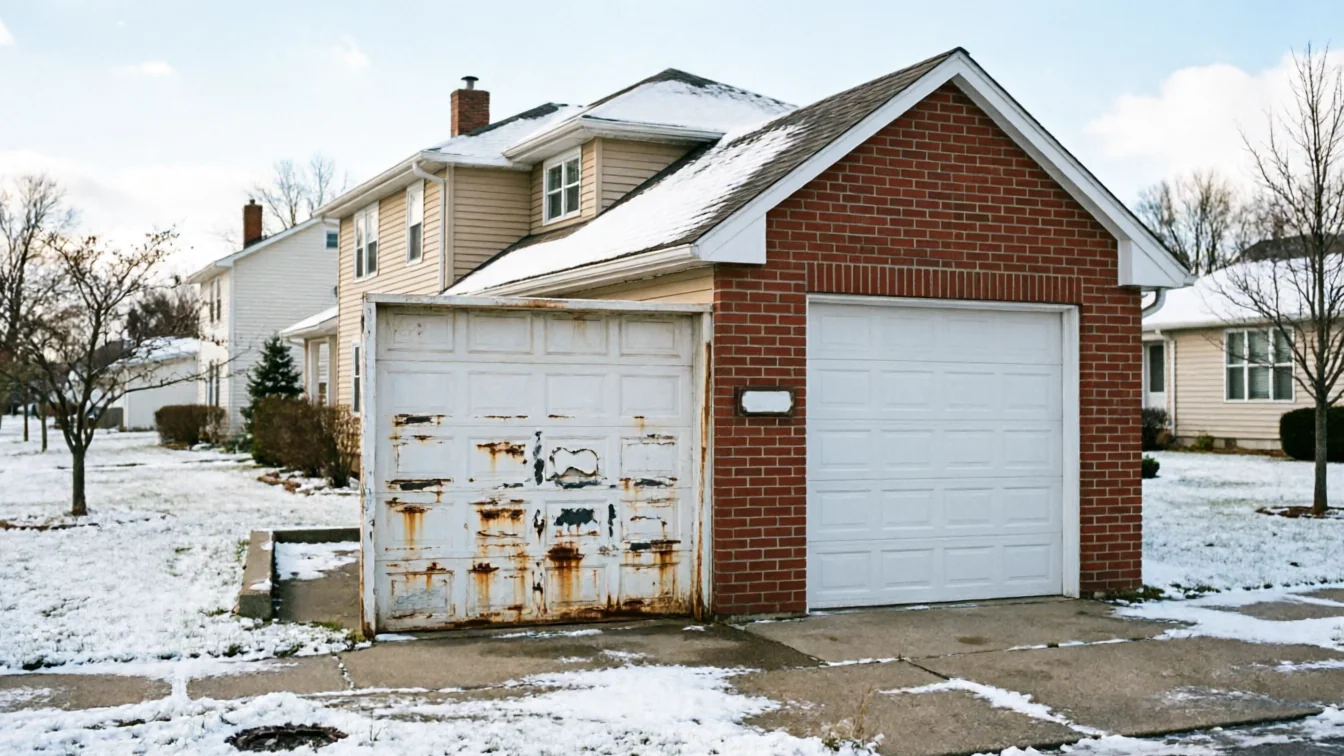
Why a Garage Door Goes Off Track
Elk River homes built mostly in the 1980s and 90s see off-track doors from cold-snap bent track and worn rollers.
Read guide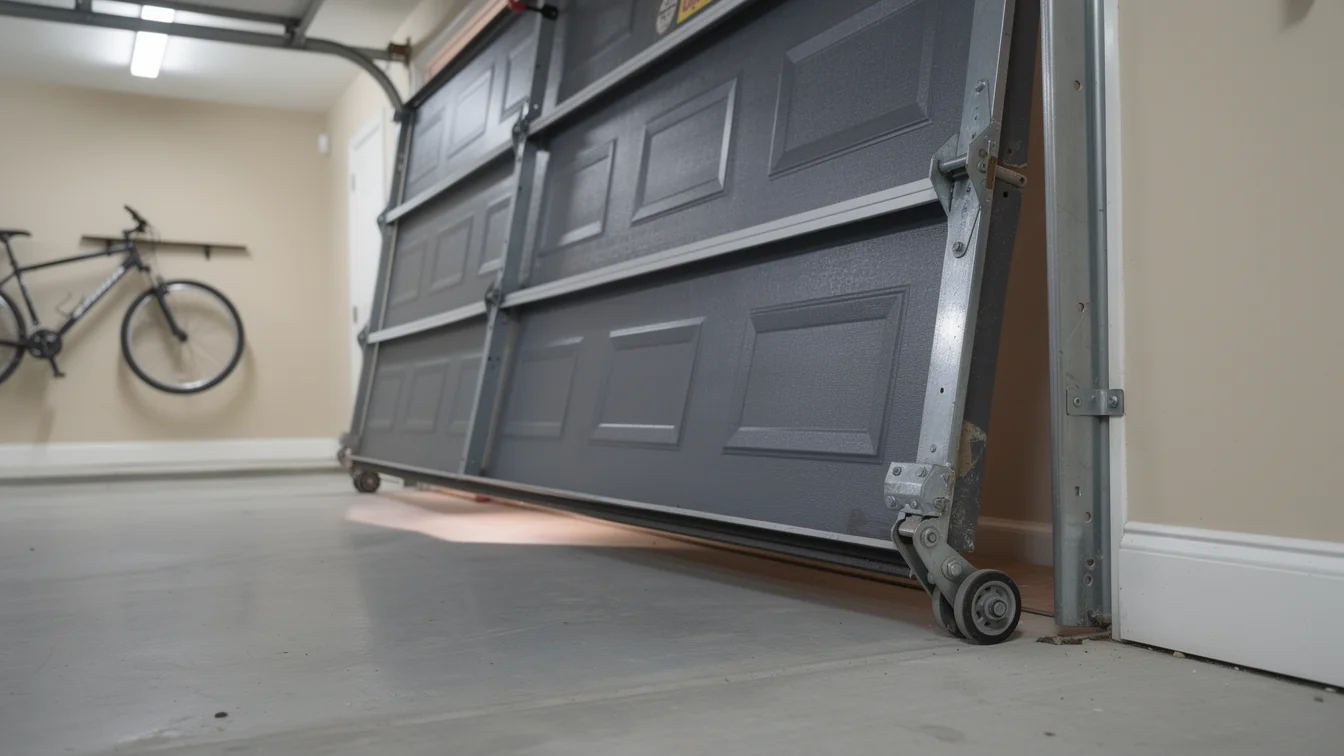
Why Weather Seals Matter on Elk River Garage Doors
In Elk River, MN, most garage doors sit on housing built between 1965 and 2007, and worn weather seals let cold air in fast during severe winters here.
Read guide
When a Spring Goes in Elk River's Cold
Elk River homes built 1965-2007 run torsion springs through severe cold winters.
Read guideReady when you are
Need a garage door sorted in Elk River?
Elk River Garage Door Pros repairs and installs garage doors, springs and openers in Elk River, MN and the surrounding area.