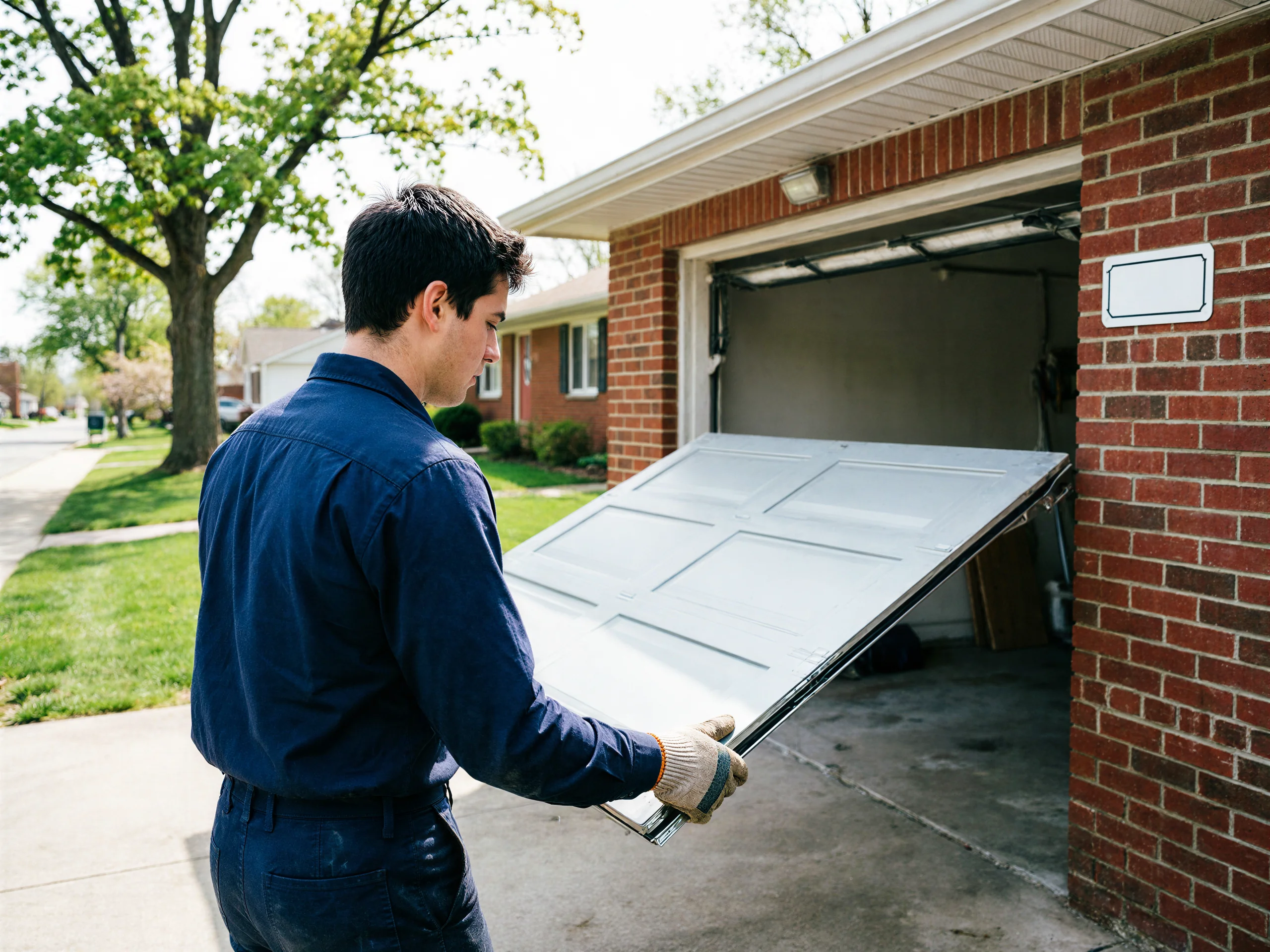
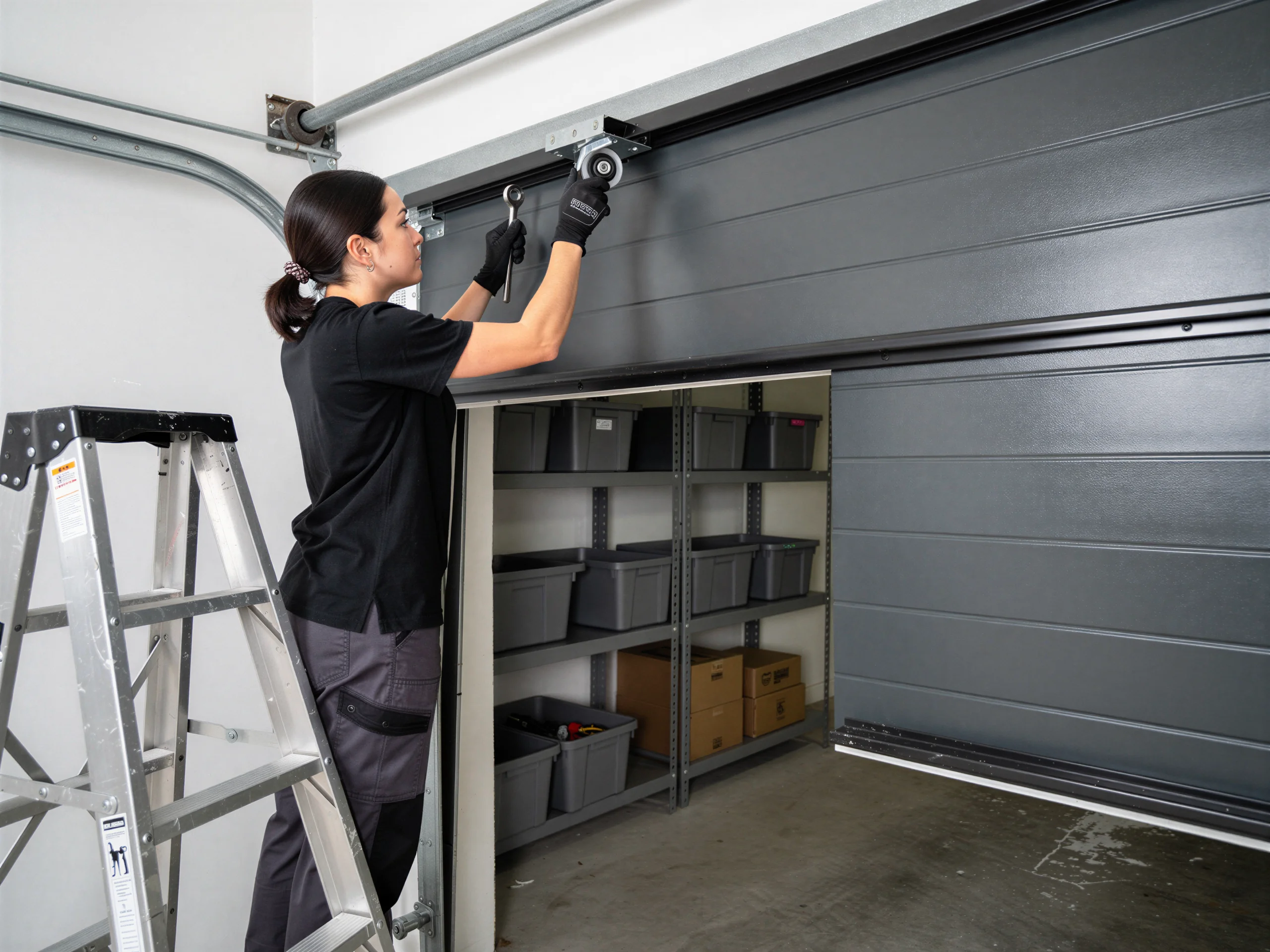
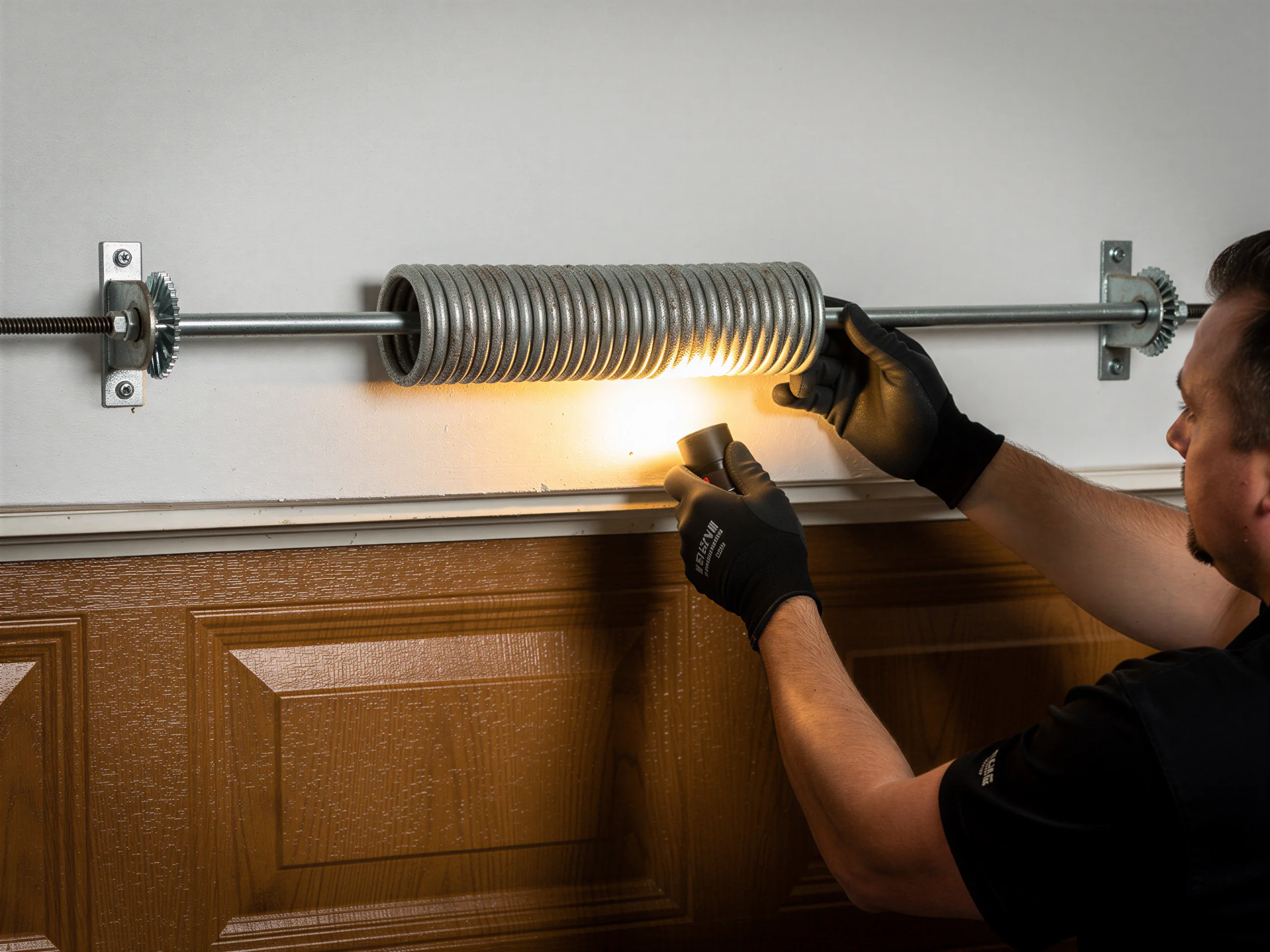
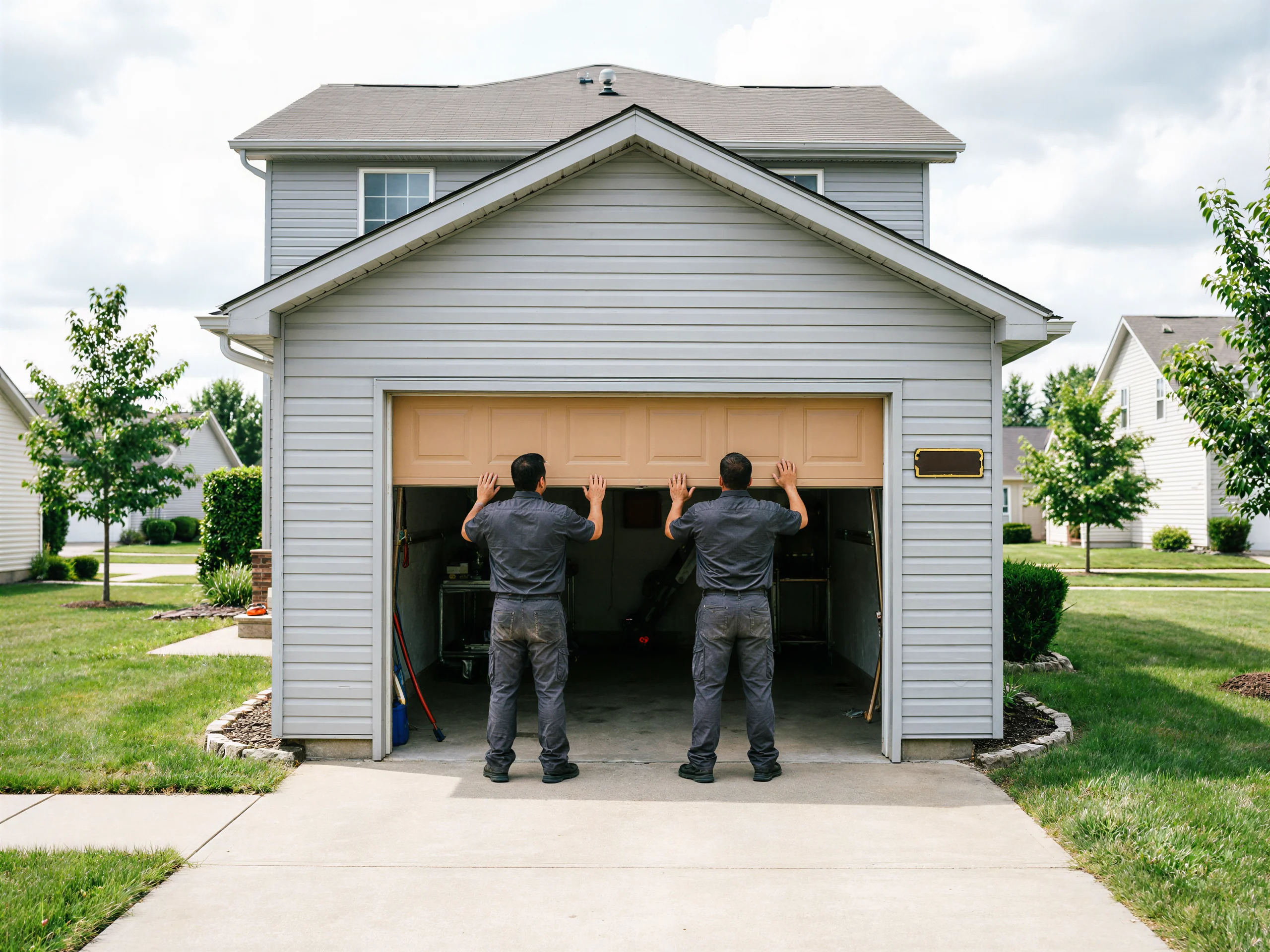
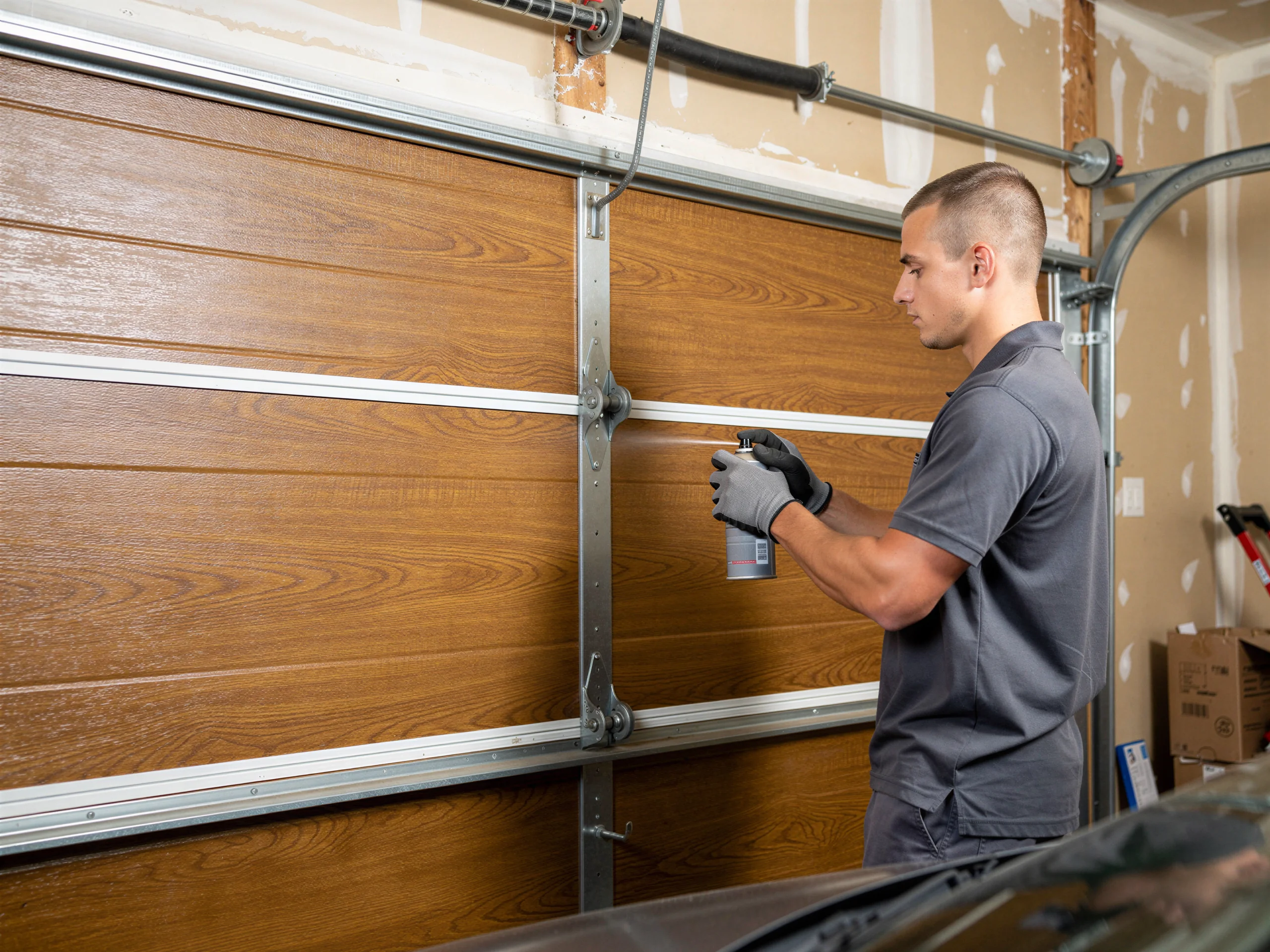
This region sits in a cold, severe climate band, and that's the part that turns a cosmetic dent into a functional problem fast. A bent or buckled panel breaks the door's insulation seam right where it's weakest - the horizontal joint between sections. On a door built to a 1980s or 90s spec, that seam was never rated for the temperature swings this area gets now, and a gap there lets cold air track straight into an attached garage, which on plenty of homes shares a wall with living space.
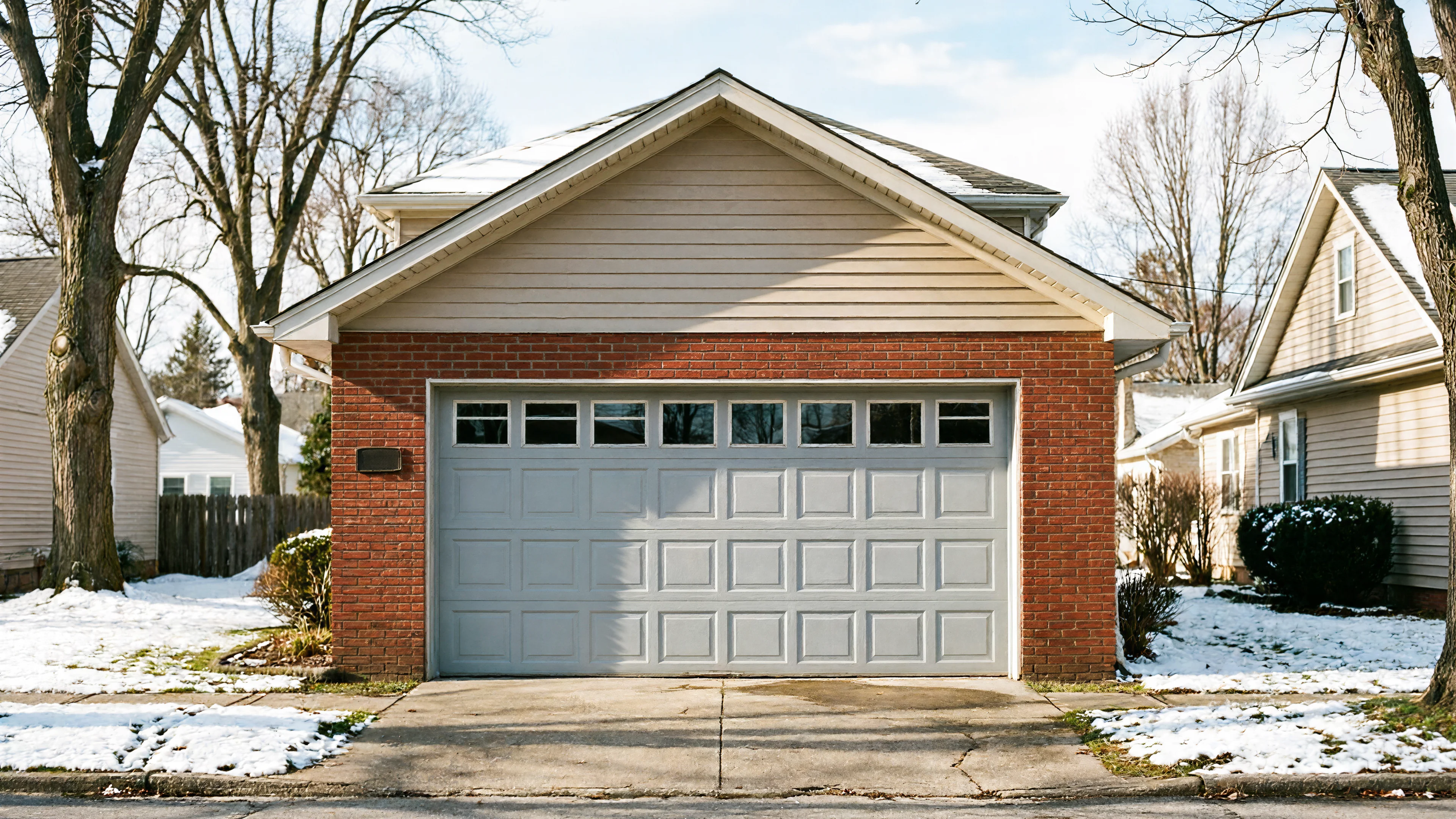
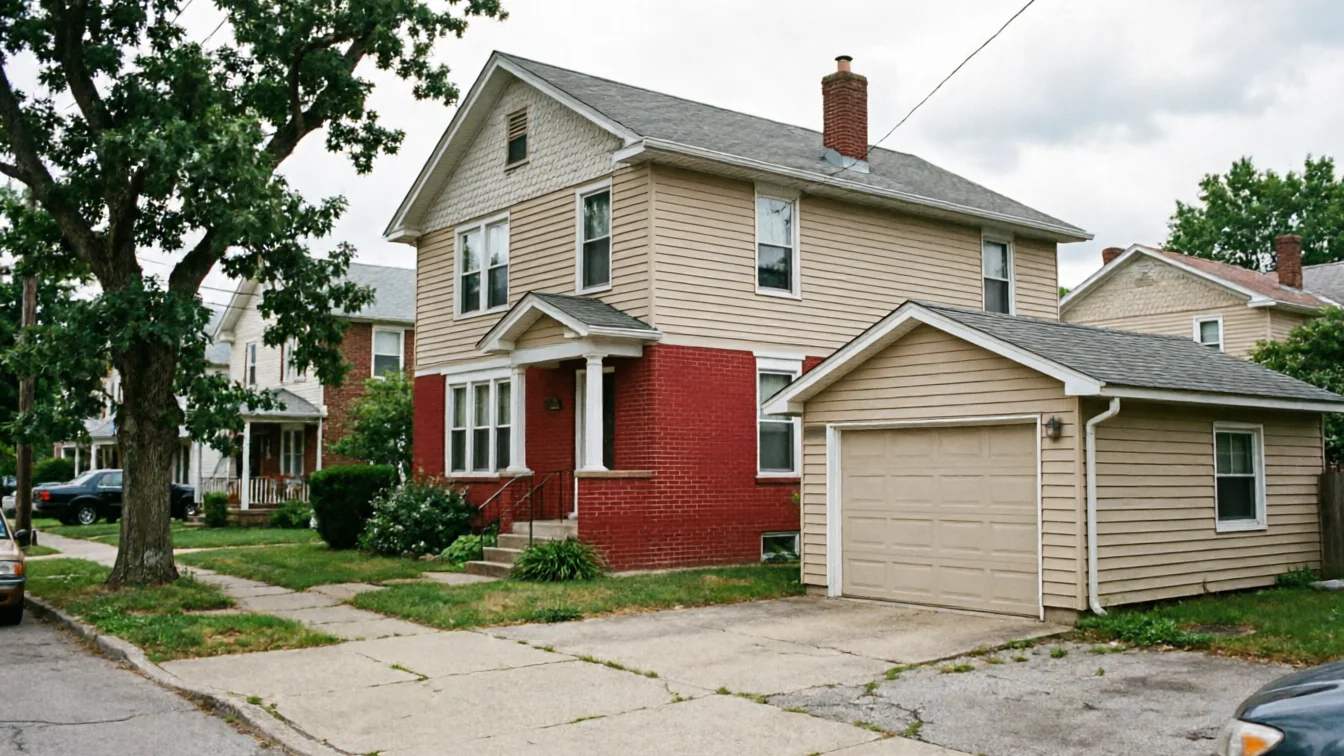
The housing built between 1965 and 2007 across the 26 communities we work in mostly used steel sectional doors with painted finishes that chalk and thin over decades. Once the paint layer goes, rust finds the dent first, and a small ding becomes a hole within a season or two. That's a different failure path than you'd see in a milder climate, where a dented panel might just stay cosmetic for years.
We see this pattern most on doors original to houses from that same build era - the panel skin is original-spec steel, thinner than what's sold today, and it doesn't take an impact the way a current door does.