Blog
When a Spring Goes in Elk River's Cold
Elk River homes built 1965-2007 run torsion springs through severe cold winters. Here's what to check before you call, and why waiting makes it worse.
Checking It Yourself
If the door won't move, or it moves and then drops, look at the torsion spring above the door before you touch anything else. A broken spring shows a visible gap in the coil, usually dead center over the opening. You'll also hear it: a loud bang, often mistaken for a gunshot or something falling in the garage, is almost always the spring letting go.
Do not pull the emergency release cord and try to lift the door by hand if you suspect this. A door on a broken spring weighs its full weight on your arms and the cables, and in a cold garage the steel is stiffer and more likely to kink or snap further under load.
Check the two cables running down each side of the door to the bottom bracket. If one looks frayed or has jumped off the drum, stop. That's a second failure stacked on the first, and it's not a DIY fix regardless of your tools.
Most houses in this area went up between 1965 and 2007, with the bulk from the 1980s and 90s, so you're very likely dealing with a standard torsion spring setup on a steel header, not the older extension-spring doors you'd find in much older housing stock. That matters for what a tech brings on the truck.
How Local Conditions Play In
This area sits in a severe cold climate band, and that's the actual reason spring failures cluster hard in January and February here rather than spreading evenly through the year. Steel contracts in the cold, and a spring that's been flexing through 15 years of temperature swings in an unheated garage is already fatigued before the cold snap even hits. The drop in temperature is often just the final push on a spring that was close to its cycle limit anyway.
Garages in this part of Minnesota are rarely heated, so the spring lives at outdoor-adjacent temperatures for months at a time. Combine that with housing stock from the 1965-2007 window, a lot of which is now 20 to 50 years old, and you've got springs that are past or near their rated cycle count right when the metal is least forgiving.
This isn't a reason to panic every cold morning, but it is why a spring failure here tends to happen without warning on a hard-freeze night rather than giving you weeks of noisy degradation first.
The Situation
A broken torsion spring means the door has no counterbalance. The opener was never built to lift the full weight of the door on its own, and running it anyway strains the motor, the gears, and the drive mechanism until something else fails too. Some openers will just stop and give an error rather than burn out, which is at least a cheap warning if it happens to you.
On a double garage door, which is common in this area's housing stock, you typically have two springs working together. If one breaks, the other is usually close behind it in cycle life, even if it hasn't failed yet. Replacing just the broken one and leaving a matched-age spring in place is a call worth thinking through, not an automatic decision either way.
We don't carry every spring size on the truck for every job. Torsion springs are sized to the door's weight and the drum, and a mismatch is worse than no spring at all. If yours is an unusual size, there can be a short wait on parts.
Doing Nothing For Now
If the spring broke and you're not using the garage tonight, leaving the door down and the opener unplugged is the safe move. Don't run the opener. Don't force the door up by hand on the cables if the counterbalance is gone.
Waiting a few days usually doesn't make the spring repair itself worse, but it does mean the garage is effectively locked at that height until it's fixed, and in a severe cold stretch that can mean losing the thermal buffer the garage gives the rest of the house. A garage that won't close is also a garage that won't hold heat, which matters more here than it would somewhere with a milder winter.
If you're weighing a repair against waiting it out until spring, keep in mind spring failures don't improve with time, and a second cable or drum failure from running a door on a broken spring turns a straightforward job into a bigger one.
Questions
Common questions
Why did my spring break in the middle of winter specifically?
Cold steel is less flexible, and a spring that's already near the end of its cycle life in an unheated garage is more likely to snap on a hard-freeze night than during a mild month. The cold doesn't cause the wear, but it's often the final trigger on a spring that was already fatigued.
Can I replace the spring myself if I'm handy?
Torsion springs are under high tension and sized specifically to your door's weight. Getting it wrong, or working on it without the right bars, is a real injury risk. This is one of the few garage door jobs we don't recommend as a DIY project regardless of experience level.
Do I need to replace both springs if only one broke?
Not automatically, but on a double door the two springs are usually close in age and cycle count. If one failed, the other may not be far behind. It's worth discussing before deciding to replace just the one that broke.
Recommendation
You Might Also Like
More garage door guides for Elk River homeowners.
Why a Garage Door Goes Off Track
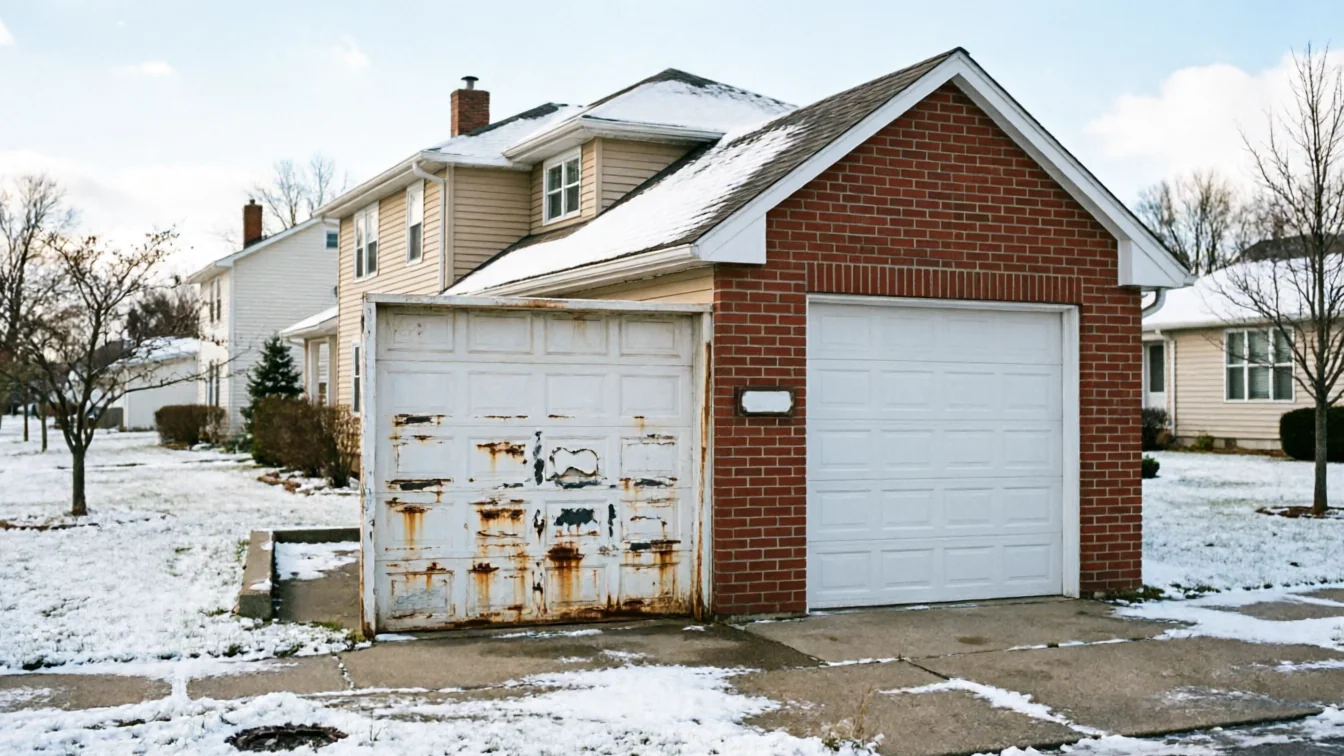
Elk River homes built mostly in the 1980s and 90s see off-track doors from cold-snap bent track and worn rollers.
Read guide
Why So Many Elk River Garage Doors Leak Heat
A look at why garage doors on Elk River homes built before modern insulation standards leak heat, and what that means in a cold-severe climate like ours.
Read guide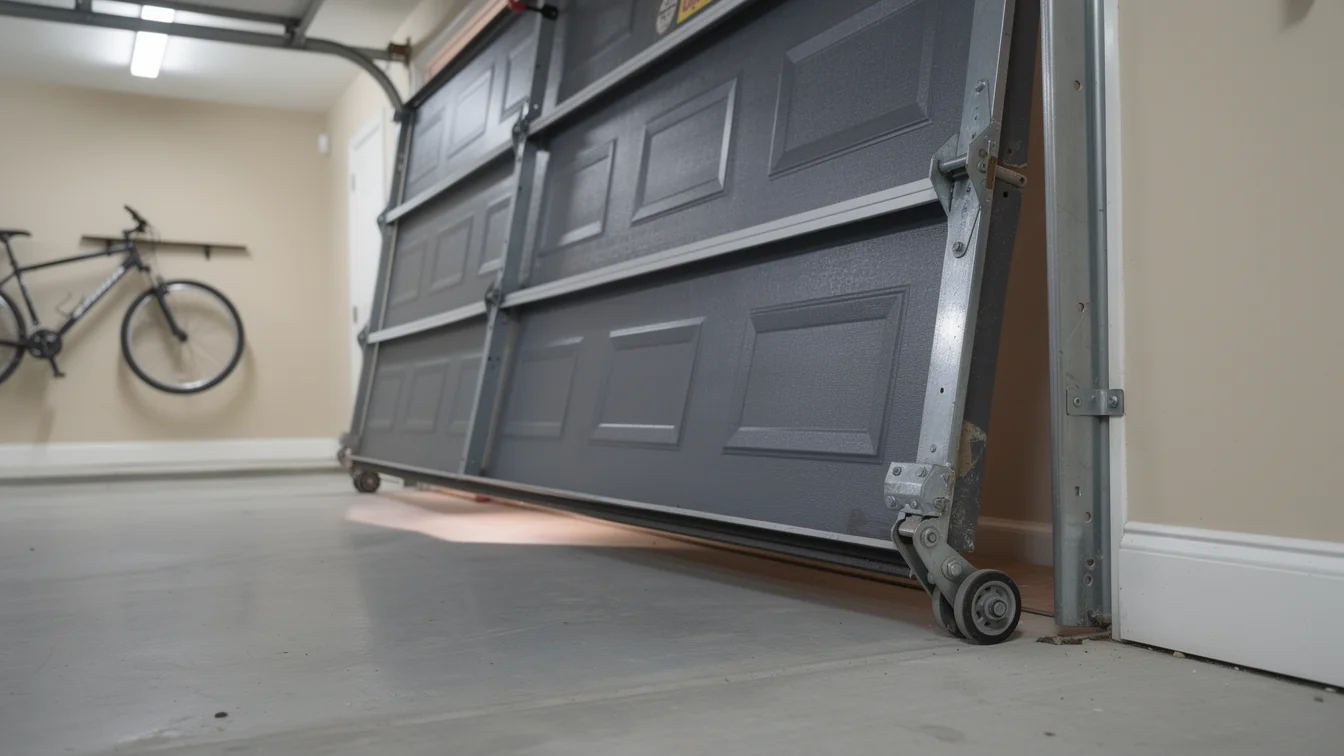
Why Weather Seals Matter on Elk River Garage Doors
In Elk River, MN, most garage doors sit on housing built between 1965 and 2007, and worn weather seals let cold air in fast during severe winters here.
Read guideReady when you are
Need a garage door sorted in Elk River?
Elk River Garage Door Pros repairs and installs garage doors, springs and openers in Elk River, MN and the surrounding area.