Rust and oval rollers
On the older steel-roller setups common to Monticello's 1990s-built homes, you'll often see rust bloom right where the roller meets the stem, or a roller that's worn into an oval instead of a circle.
Monticello, Elk River
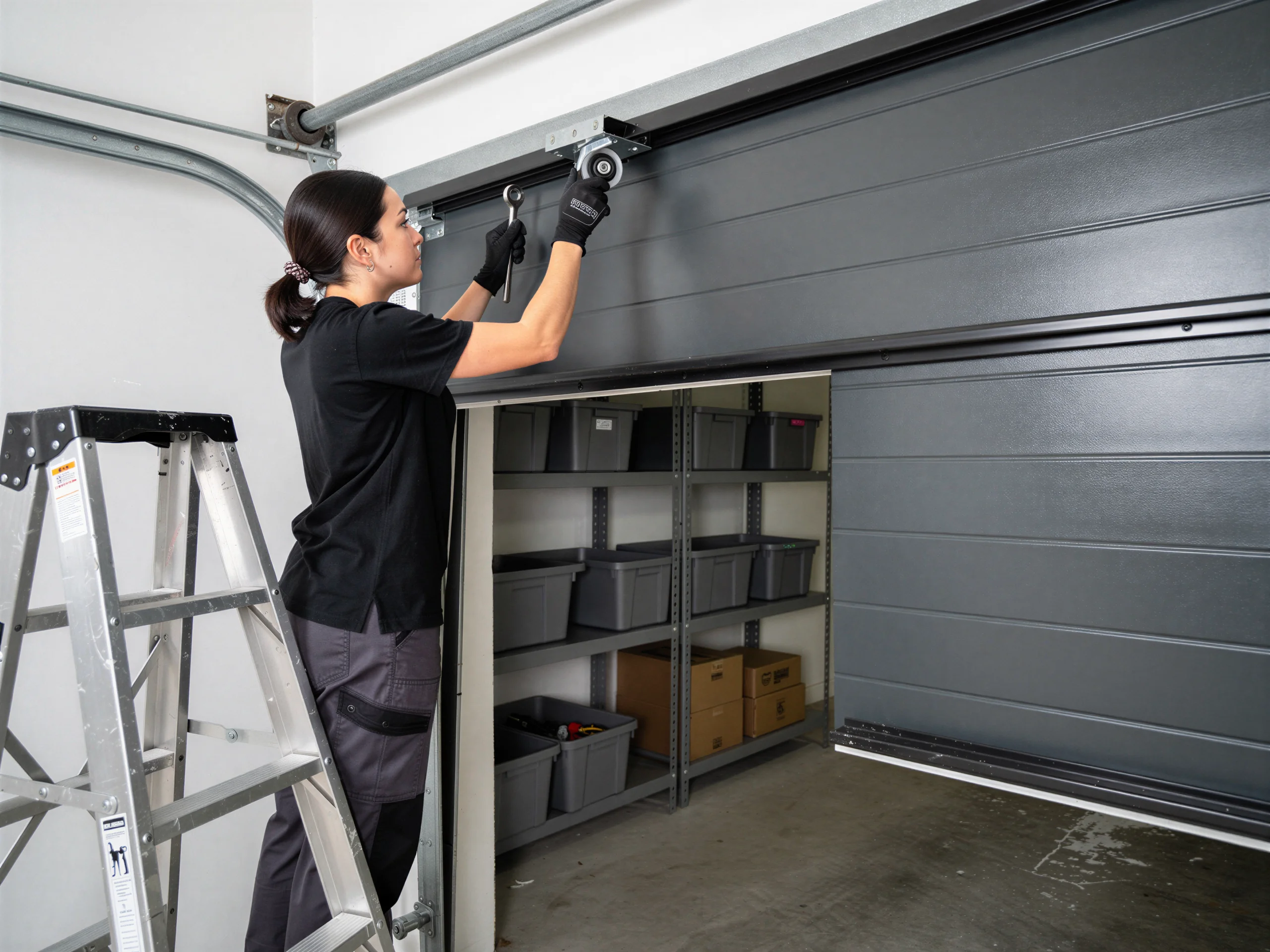
Worn or seized rollers on a Monticello garage door, built mostly around 1997. We drive the 12 miles from Elk River to replace them right, steel or nylon.
Local causes
The call to Monticello is a 12-mile drive from Elk River, which shapes how this job gets scheduled more than people expect - it's rarely worth sending a truck out for rollers alone, so when we're there we look at the whole track run, the hinges, and the cable while we're under the door anyway. That drive matters because Monticello's housing stock is its own thing: the area's median year built sits around 1997, a touch newer than the broader service area's 1993 median, which means a lot of these doors are hitting the same age-related failure at close to the same time. Rollers original to a mid-to-late-90s build are usually stamped steel, unsealed, running in steel track with no bearing to speak of. Thirty years of that same roller riding the same six inches of track wears a groove, and once the groove is there, a new roller still chatters in it. Add a Minnesota winter - this region sits in a cold-severe climate band - and the grease in an old steel roller stiffens before the door's even open, which is a different failure than a worn rubber tire on a newer nylon roller. Two different problems, same symptom: a door that grinds.
Warning signs
Most of what we hear described is the same handful of symptoms - a scraping or clunking as the door travels, a roller that looks flat on one side instead of round, or a door that jumps slightly at the same spot in the track every single time.
On the older steel-roller setups common to Monticello's 1990s-built homes, you'll often see rust bloom right where the roller meets the stem, or a roller that's worn into an oval instead of a circle.
On houses with newer nylon rollers swapped in at some point, the tire itself cracks or chunks out, especially after a stretch of sub-zero weather that makes the nylon brittle rather than just slow. Either way, the noise usually shows up before anything actually falls apart.
If you're only hearing it on the bottom two panels, that's usually the rollers taking the brunt of the door's weight as it comes down into the frame - a different wear pattern than the top rollers, which take more side-load from the track curve.
Watch-outs
A roller that's worn enough to bind doesn't just make noise - it starts fighting the opener, and the opener will push through that resistance for a while before anything trips. That extra strain shows up on the cable first, usually, and on a torsion spring second. On a lot of the original steel roller setups from the Monticello building years, the stem bends slightly before the bearing surface fails outright, and a bent stem can walk the roller out of the track entirely on a cold morning when everything's stiff. We've also seen a track that's been worn into a groove by one bad roller start chewing through the replacement roller faster than it should, because the track itself needs straightening or replacing, not just the part riding in it. Ignoring a grinding roller long enough turns a $20-a-roller fix into a track and hardware job.
Our process
We pull the door down, check which rollers are actually worn versus which ones are just noisy from dry stems, and replace what needs replacing - we don't sell a full set of ten when three are doing fine.
For Monticello's older steel-roller doors we usually move the whole set to sealed nylon rollers, since they run quieter and don't seize up the way bare steel does once the grease goes stiff in a cold-severe winter.
If the track has a groove worn into it from years of the same bad roller, we true it up or replace the section rather than put a new roller into a track that'll just wear it again.
Springs, cables, and hinges get a quick check at the same time, since we're already there and a 12-mile round trip isn't one we want to make twice for a part we could've caught the first visit.
DIY or pro
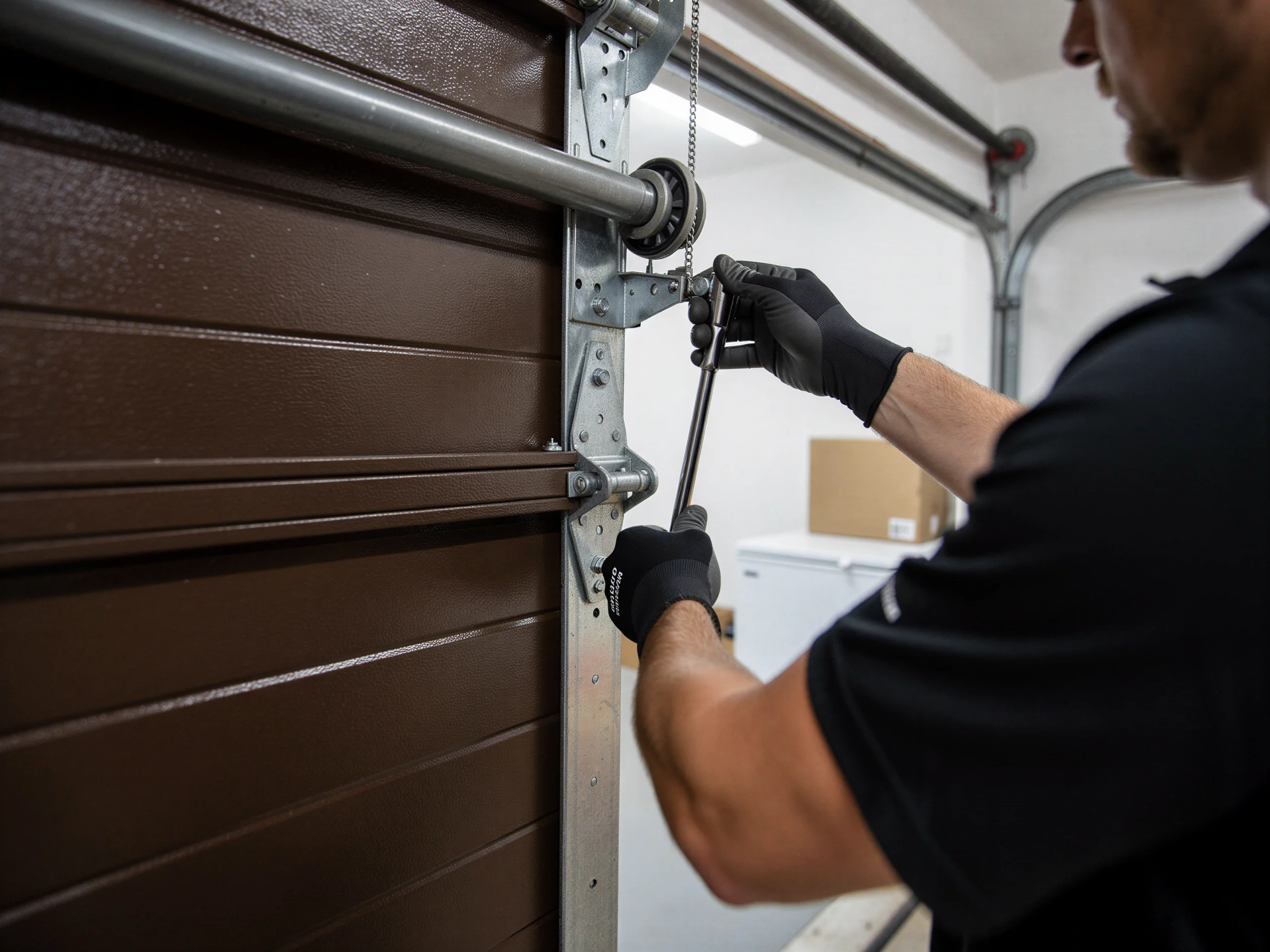
Swapping a single roller on an unloaded, low door is within reach for someone comfortable with a wrench and patient about the torsion spring staying put. What trips people up is the bottom rollers - they sit closest to the cable and the spring under tension, and working there without releasing the spring load safely is how fingers get hurt. We also don't recommend it on a door where the track itself is grooved or bent, because a DIY roller swap on bad track just buys you a few noisy months before you call anyone anyway. If the roller's binding, the door's heavy, or you're not sure which rollers are actually worn, that's a reasonable one to leave to us.
Pricing
We don't have a posted price list for roller jobs here, since the real cost swings on how many rollers need replacing, whether the track needs straightening, and whether you're moving from steel to sealed nylon. What we can say is that catching worn rollers early, before they chew a groove into the track or strain the cable, keeps the job to rollers and nothing else - which is the cheaper version of this call every time. At Monticello's median household income of $81,563, that's usually the math that makes sense: fix the rollers now, not the track and cable later.
Questions
Most roller jobs on a single garage door run under two hours once we're on site, longer if the track needs straightening or we find a bent stem that's been walking a roller partway out of the channel. We'll tell you up front if it looks like more than a roller swap.
If most of the rollers are the same age - which is common on Monticello's 1990s-built doors where everything's original - replacing the whole set at once usually makes sense, since the others aren't far behind. If it's a mixed-age door from past repairs, we only replace what's actually worn.
We cover Monticello from Elk River, about 12 miles out, and we're happy to make the trip for a roller job alone. Since we're already there, we'll flag anything else worth knowing about on the door - springs, cable, hinges - rather than wait for a second call.
Generally yes. This area sits in a cold-severe climate band, and bare steel rollers tend to stiffen with the grease inside them on the coldest mornings, while sealed nylon rollers keep moving smoothly. It's one of the more common upgrades we do on older steel-roller doors out this way.
Explore more
Ready when you are
Elk River Garage Door Pros repairs and installs garage doors, springs and openers in Elk River, MN and the surrounding area.