Sandwich panel construction
That ten-year gap matters for panels. A door built in the early 2000s is almost always a steel sandwich panel, polystyrene or polyurethane core, factory-painted, on a standard torsion or extension setup.
Dayton, Elk River
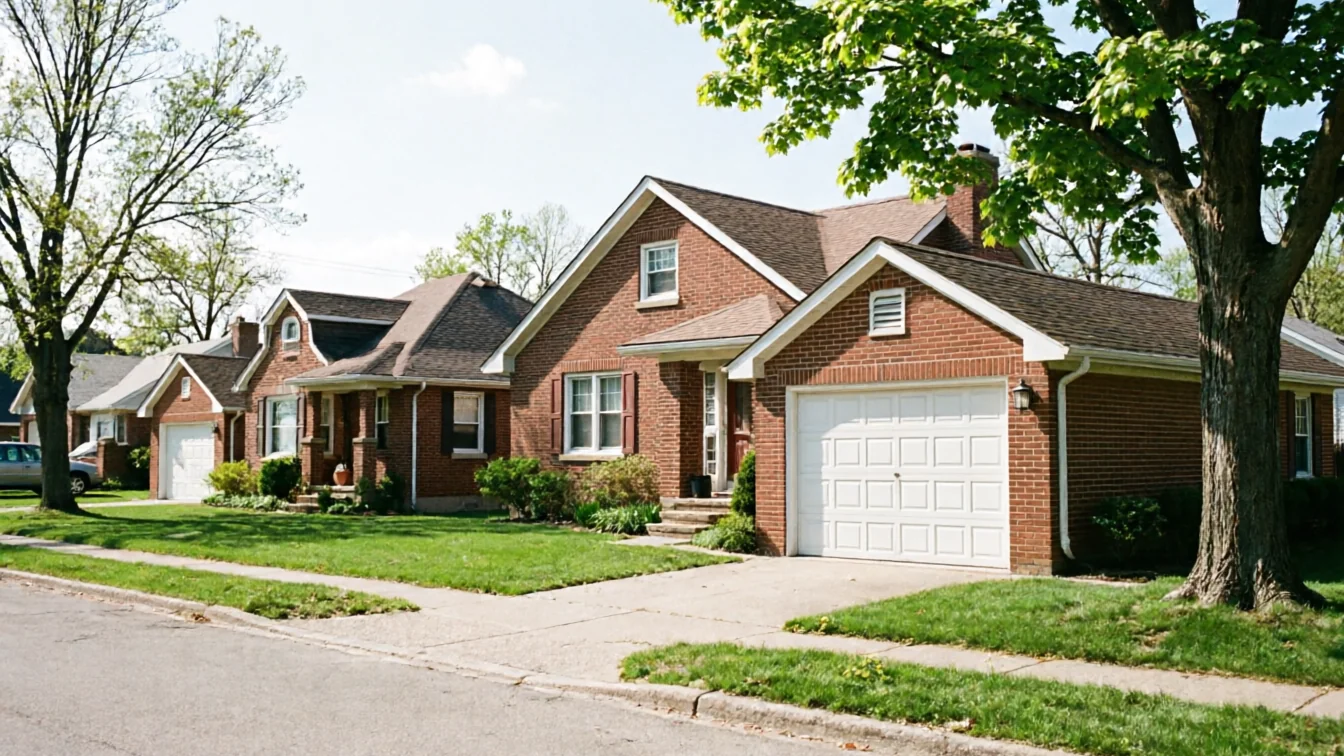
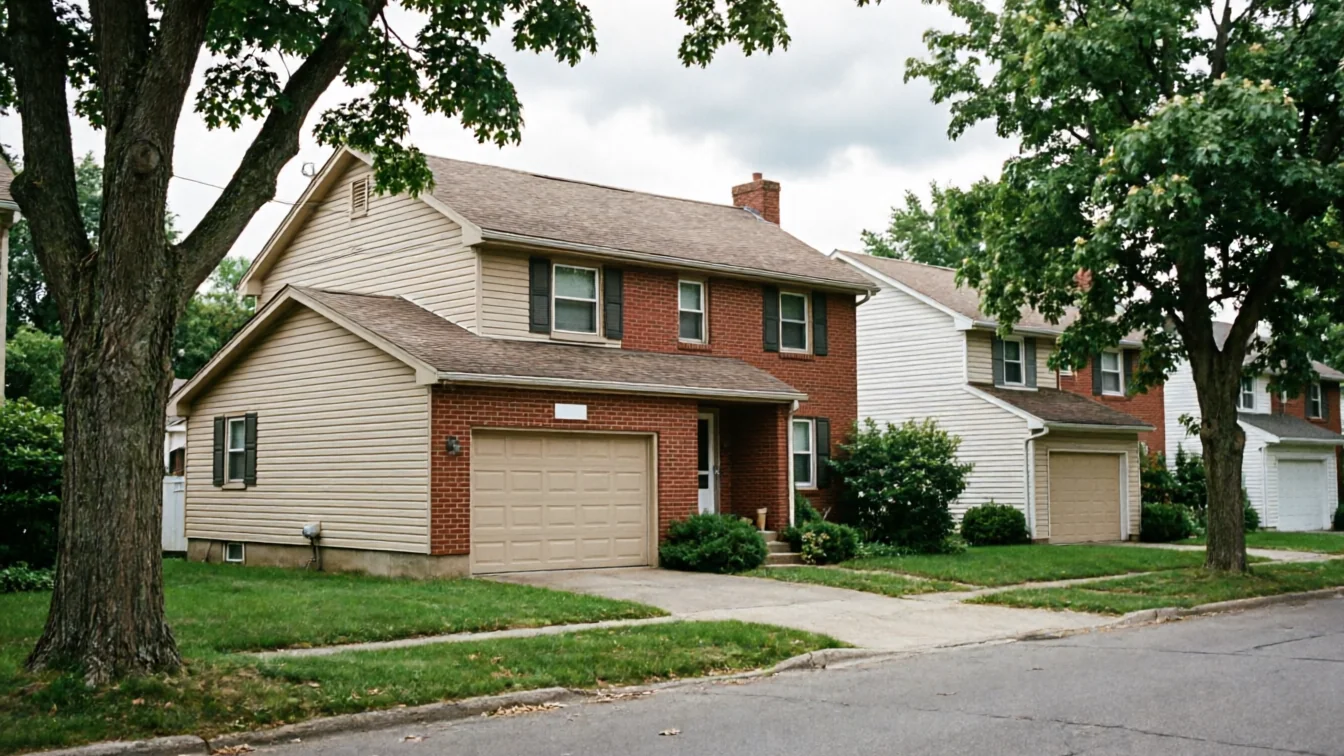
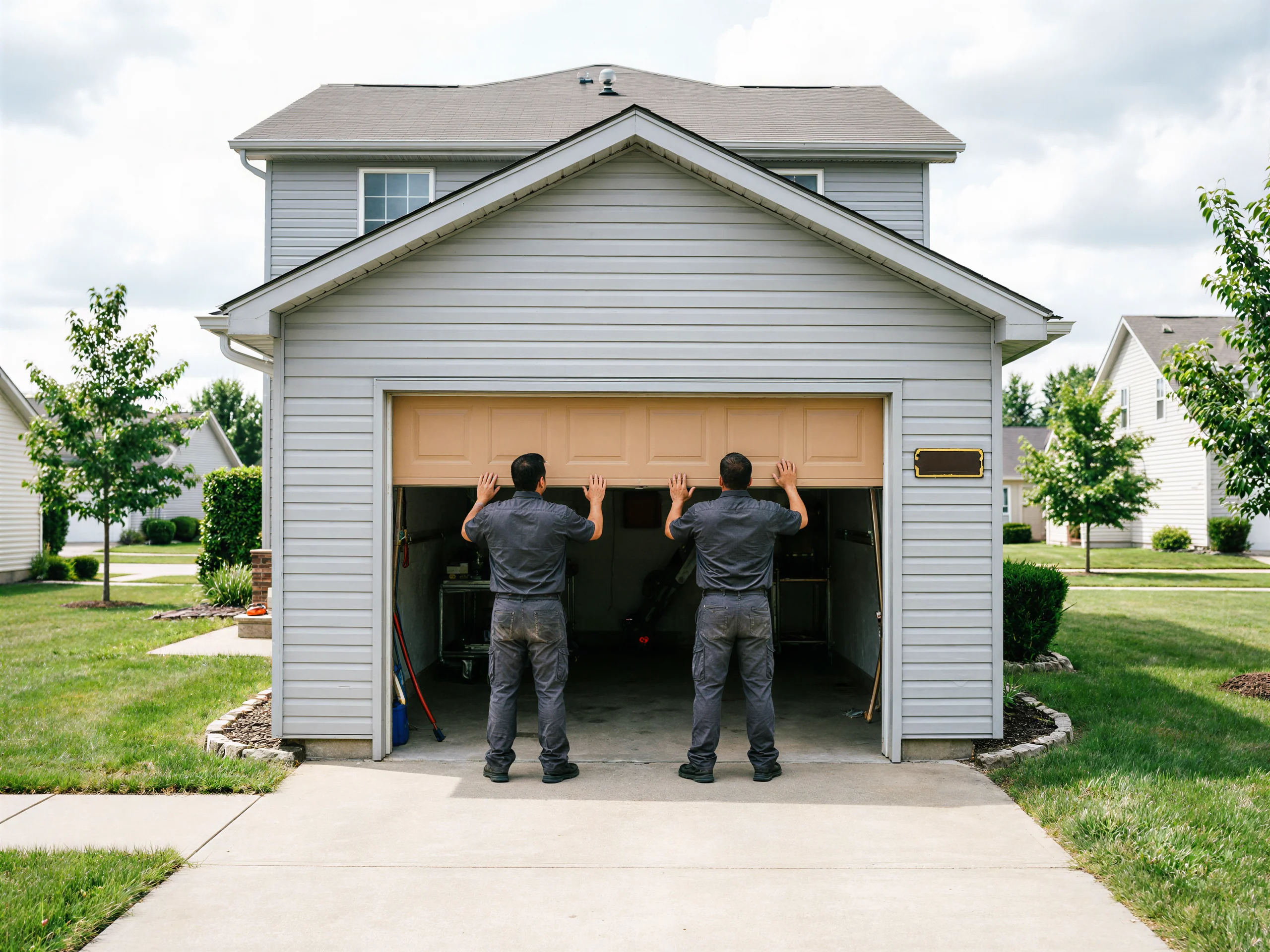
Dayton's garage doors mostly date to the early 2000s, a decade newer than the wider Elk River service area. Here's what that means for a cracked or dented panel.
Watch-outs
Dayton's housing stock skews younger than most of the area we cover out of Elk River - a lot of it went up around 2003, while the broader service territory runs from 1965 up through 2007 with a median closer to 1993.
That ten-year gap matters for panels. A door built in the early 2000s is almost always a steel sandwich panel, polystyrene or polyurethane core, factory-painted, on a standard torsion or extension setup.
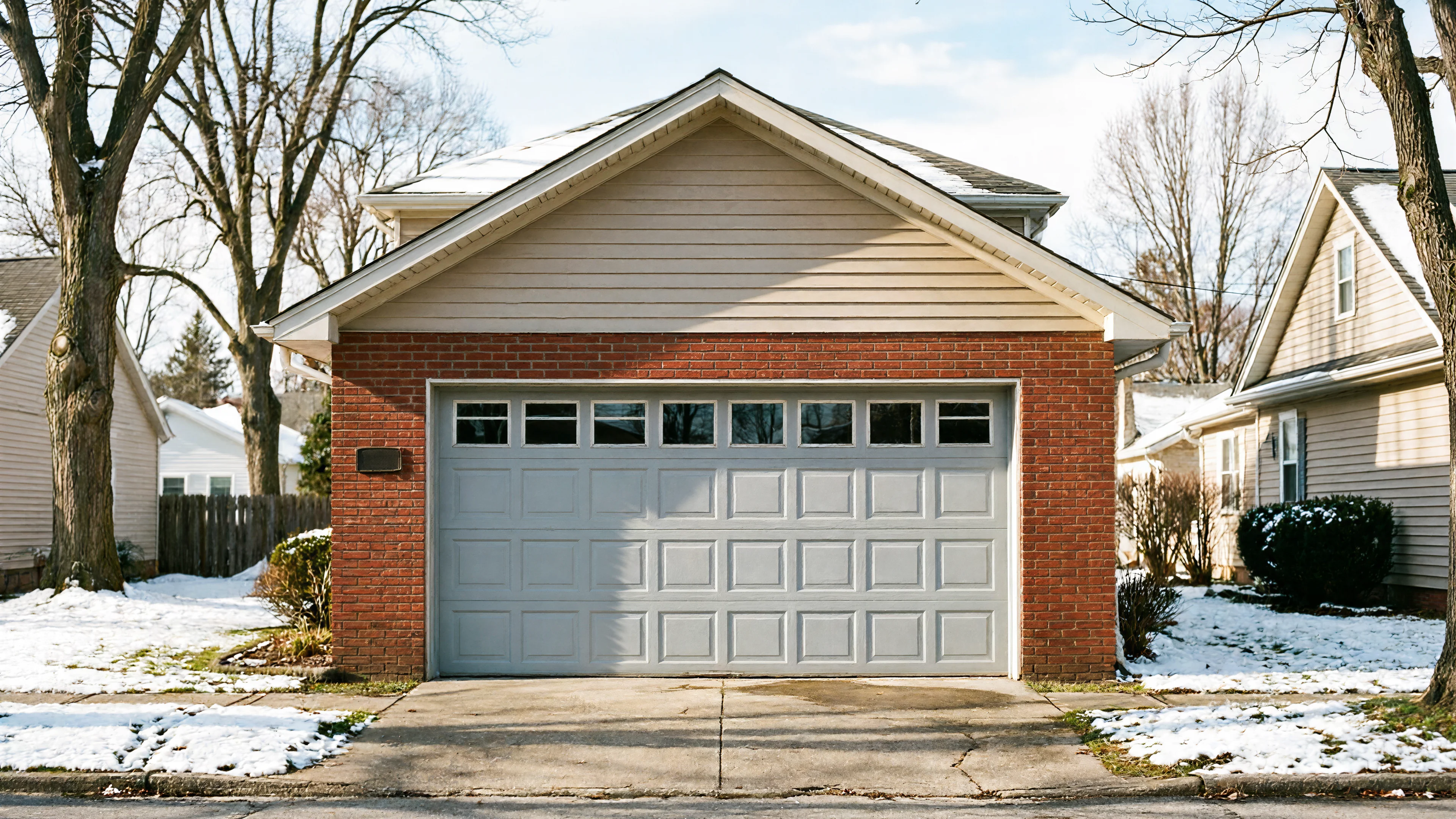
The damage you see is usually a dent from a backed-into car, a crack along the bottom panel from a plow or a stuck rock, or warping where water has sat against the bottom seal for years.
Hail and wind load on a Minnesota winter (this is a cold-climate zone, and cold matters for how steel and foam behave) can also split a seam that was fine the year before. What you rarely see here, compared to older housing stock elsewhere in the area, is the single thick wood panel or the odd custom width that nobody stocks anymore.
Our process
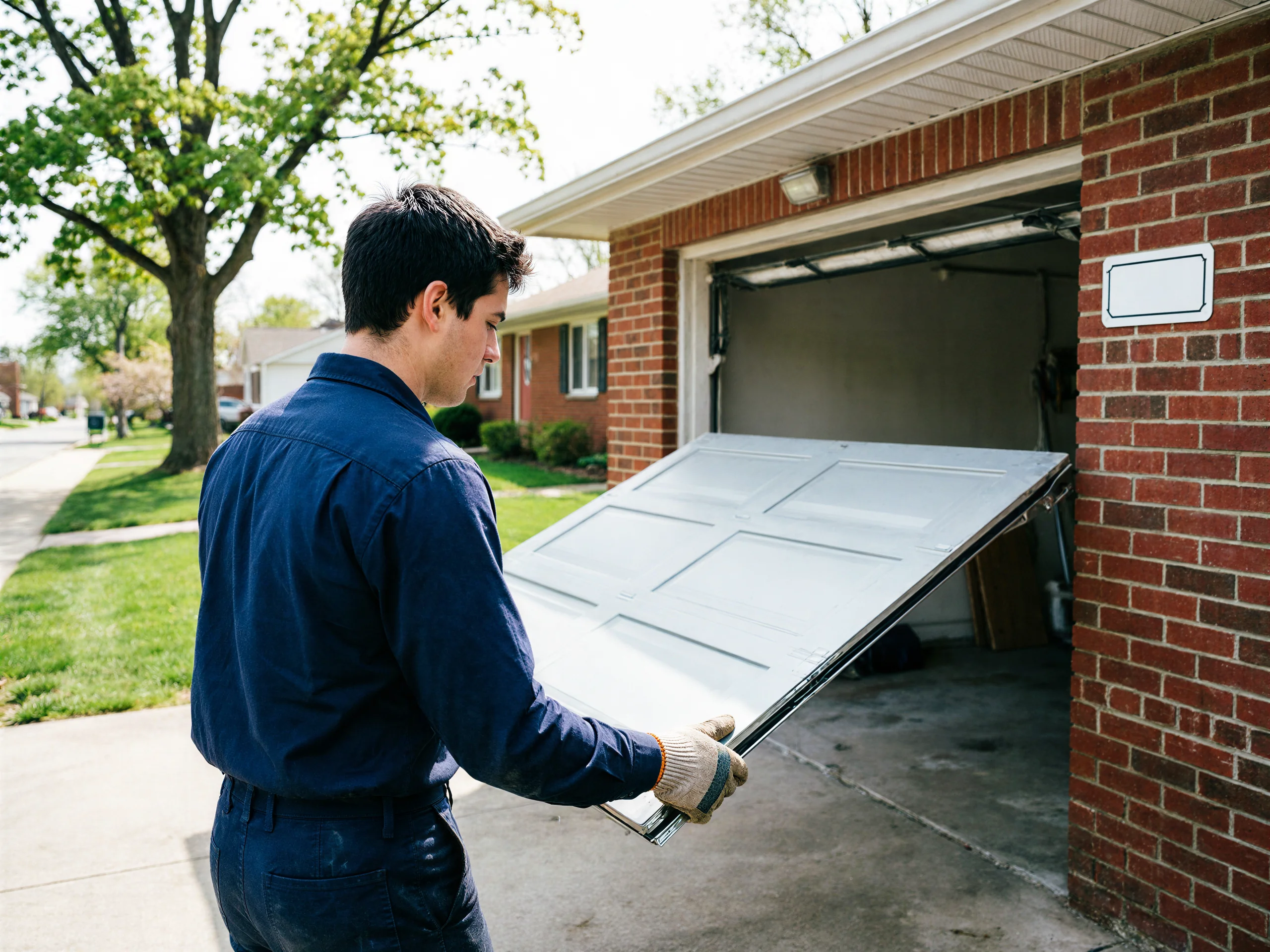
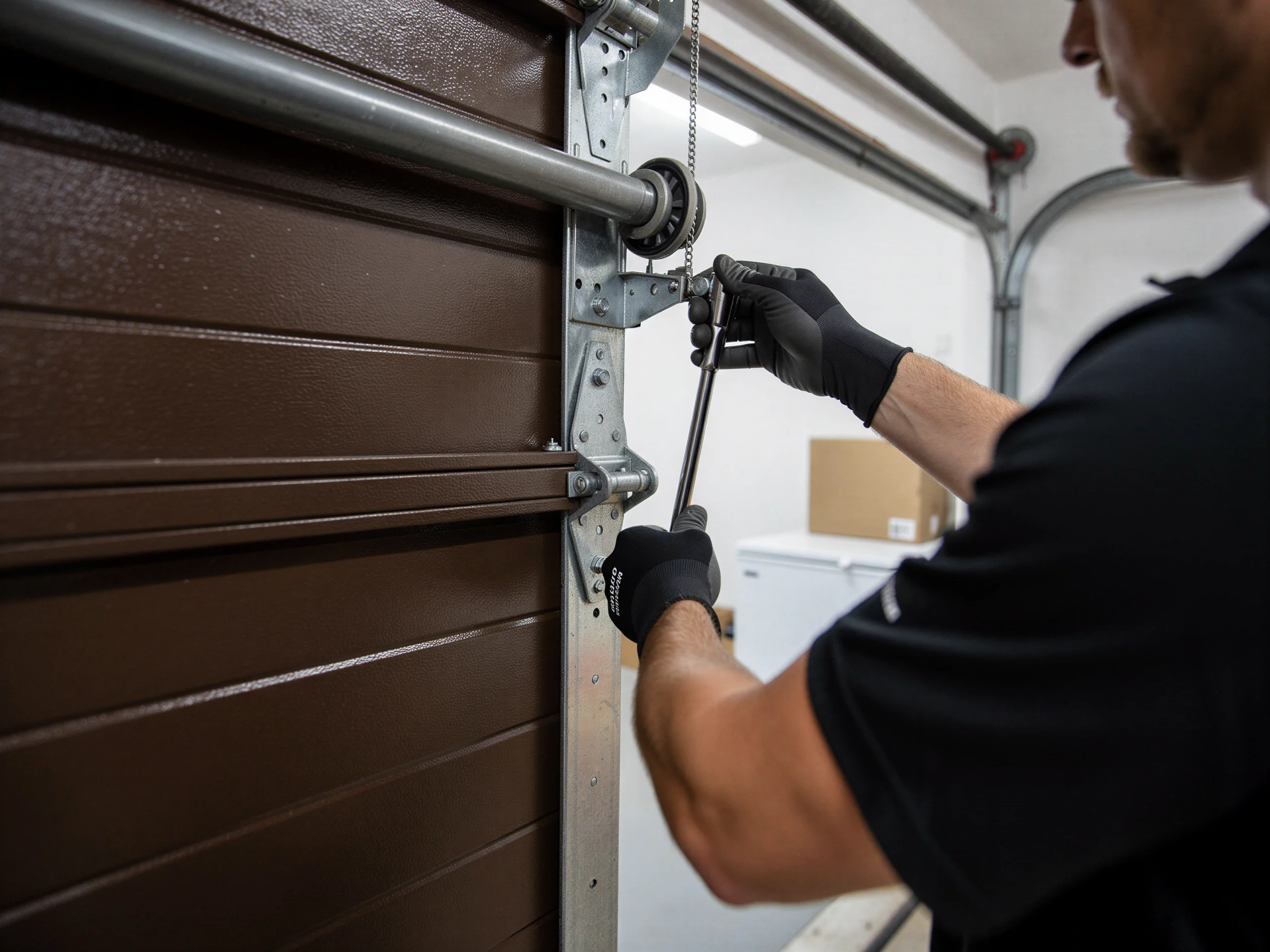
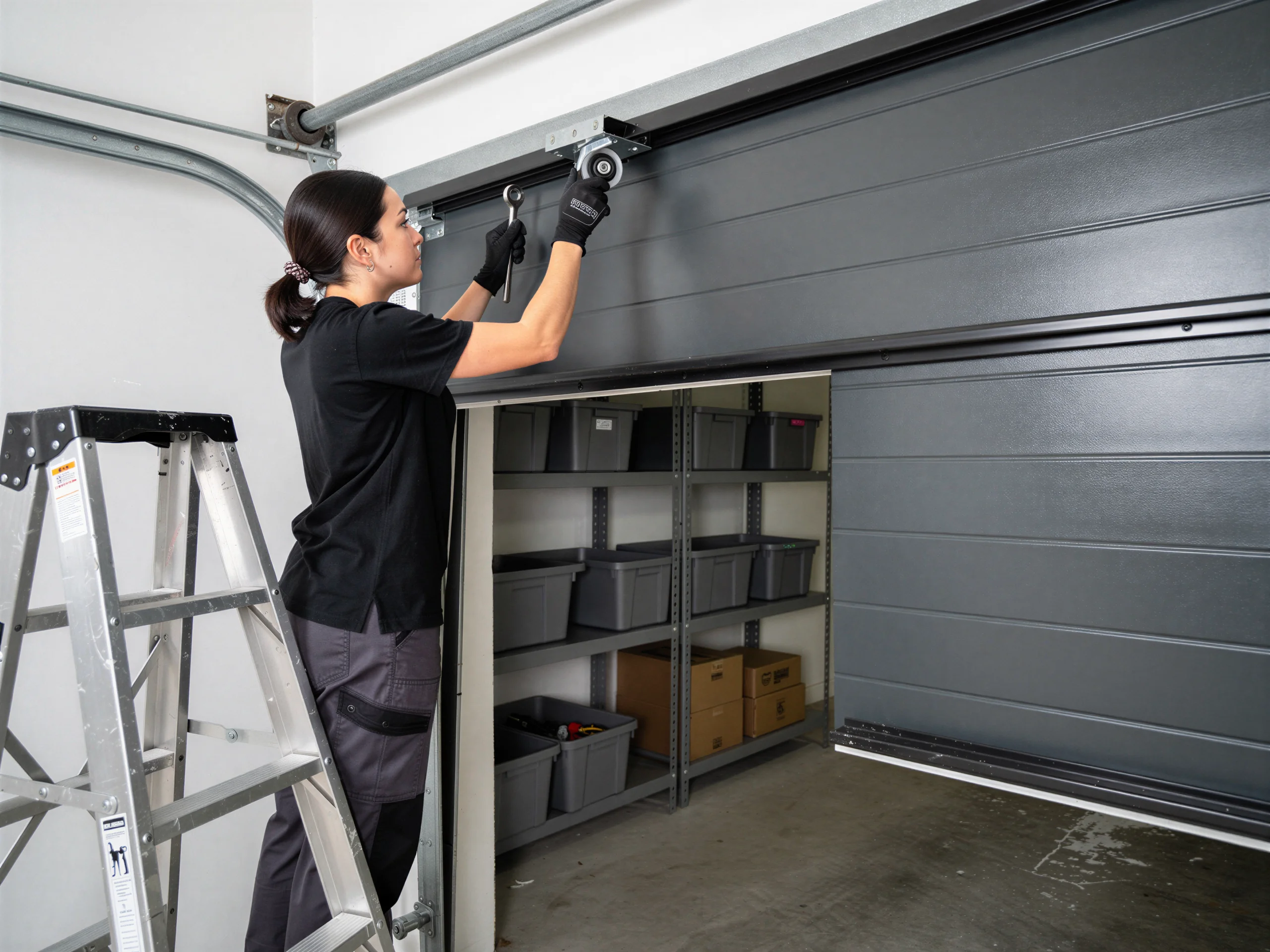
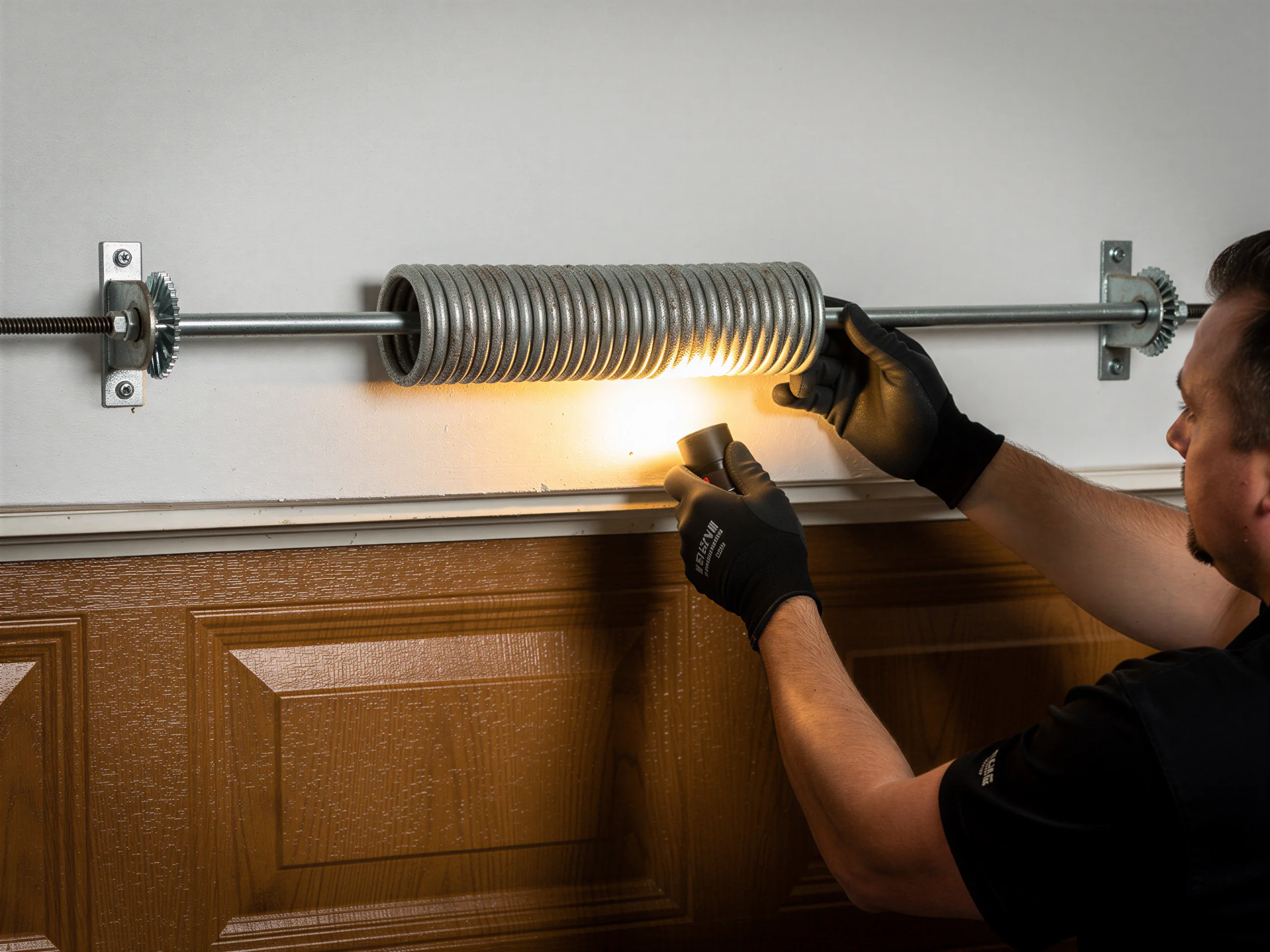
We pull the section number and panel height off the door itself, not off a guess, because even within 2000s-era construction there are a few common sizing runs. If one panel is damaged and the rest of the door is sound, we replace just that section - unbolt the hinges, slide the old panel out, set the new one, re-hang. If the track has been bent from the same impact that cracked the panel, that gets straightened or swapped before the new panel goes in, because a true track and a new panel is the only combination that actually rolls right. We check spring tension while the door is apart; a panel swap is also the moment to catch a spring that is close to the end of its life, since the door is already open and unloaded.
Local causes
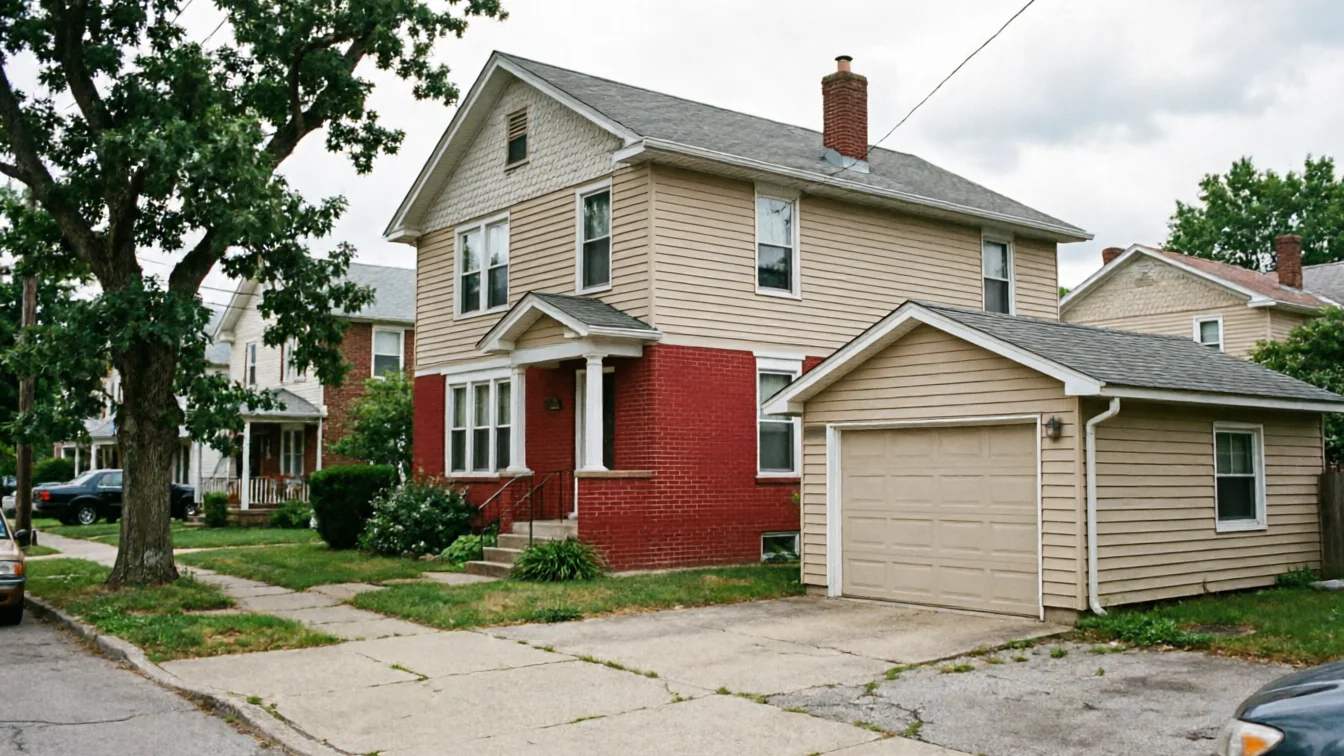
Because Dayton skews newer-built than the rest of what we cover out of Elk River, the doors here are more often a standard builder-grade steel panel than the older or custom styles you find closer to town. That's good news for repair speed, since standard panels in standard widths are what gets stocked - but it also means homeowners sometimes assume any panel will bolt onto any door, and that's where things go wrong. A panel pulled from a different manufacturer's run, even one close in size, won't always match the hinge spacing or the skin profile, and forcing it on puts uneven stress on the track for years until something else fails. The fix that holds is matching panel to door, not panel to opening size alone.
On the truck
For the steel sandwich panels common in 2000s-built doors, we carry standard widths and the hardware that goes with them - hinges, end stiles, and the fasteners sized for that era of construction.
What we don't keep on the truck is anything custom: a discontinued color match, an odd-width door from a builder who's long out of business, or a panel style that stopped being made years ago.
If your door falls into one of those categories, the honest answer is a short order wait rather than a same-day swap, and we'll tell you that up front instead of promising something we can't deliver.
Downtime
A single stocked panel on a standard door is a same-visit job once the part is on the truck - the door goes from damaged to closing right in one trip out from Elk River. If the panel has to come from a supplier because it's not a common size or finish, the door is usually still operable in the meantime unless the damage is bad enough to bind the track, in which case we'll talk through a temporary brace or a full-door option rather than leaving you with something that can fall.
DIY or pro
Swapping a single bolted-on panel section isn't the hardest job in a garage, if the door is unplugged from the opener and the springs are left alone. Where people get hurt is treating a bent track or a loose cable as part of the same afternoon project - those carry spring tension even when the door looks still, and that's not a DIY call. If you're just replacing a cosmetically dented panel on an otherwise sound door and track, it's doable with the right panel in hand. If you're not sure the track is true, that's worth a second set of eyes before you start.
Questions
Most doors built around that era in Dayton use standard steel panel widths that are still in production, so matching is usually straightforward. Custom colors or discontinued styles from smaller builders are the exception - those take a supplier order rather than a same-visit swap.
If the rest of the door is square and the track is true, replacing just the damaged section is normal and holds up fine. We only recommend a full door when the panel style is no longer made or when damage has spread to the track and frame.
Yes. This area sits in a cold climate zone, and steel and foam-core panels get more brittle in deep cold, so a crack that starts small in December can spread faster than the same crack would in summer. Getting it looked at before a hard freeze is worth doing.
Explore more
Ready when you are
Elk River Garage Door Pros repairs and installs garage doors, springs and openers in Elk River, MN and the surrounding area.